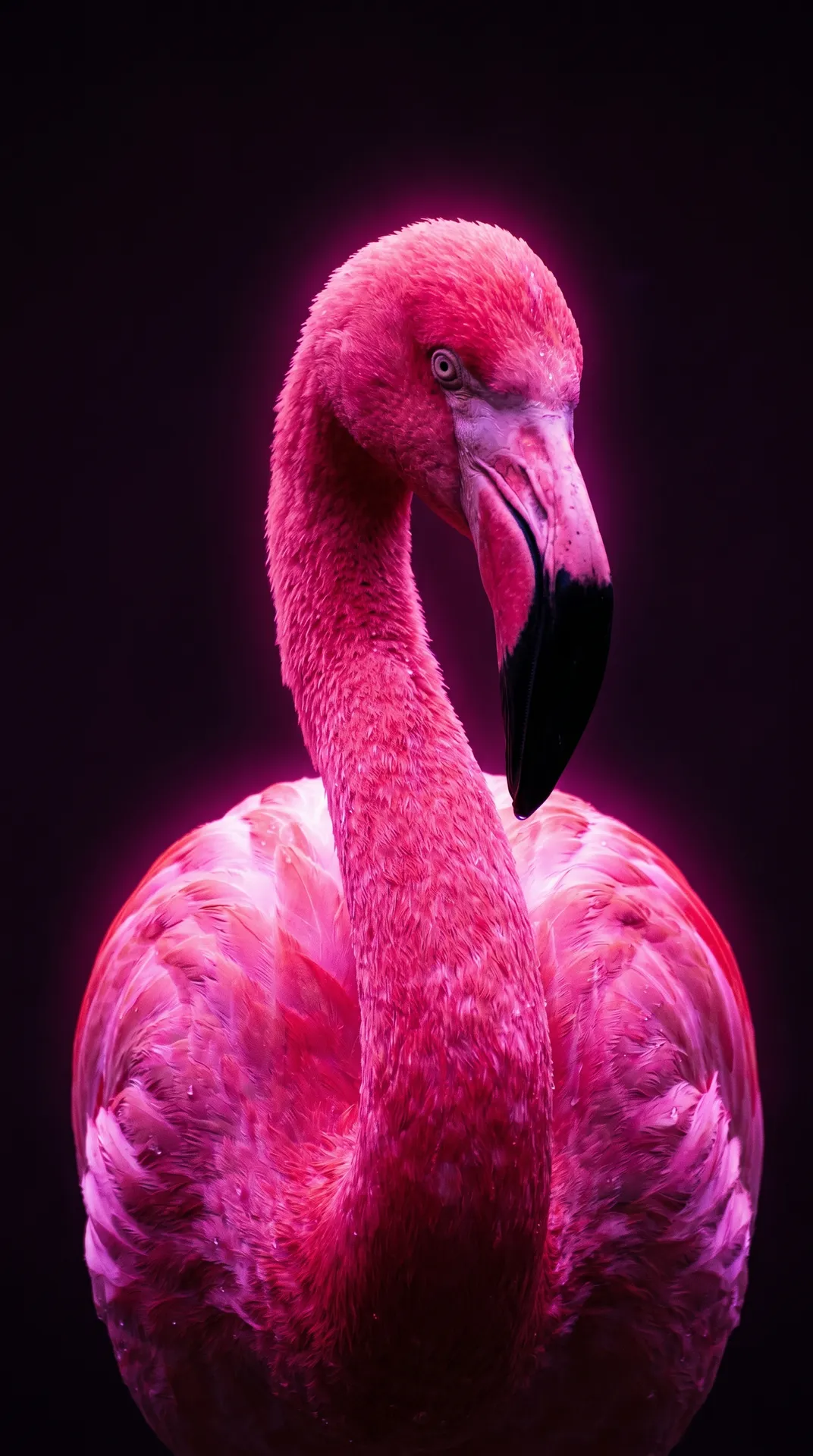
Flamingos are born grey and turn pink from what they eat
Flamingos are not born pink — they hatch dull grey and have to earn their color by eating it.
Which one is REALLY true about the Flamingo?
The short version
Flamingos get their pink from carotenoid pigments in the algae and brine shrimp they filter-feed; a poor diet fades them to white. They eat with their heads upside down, and both parents feed chicks a bright red milk produced in their throat.
Why it's so weird
- ✓The Flamingo turns its own color pink by eating it, since it hatches a dull grey.
- ✓The Flamingo gets its color from carotenoid pigments in the algae and brine shrimp it filter-feeds.
- ✓The Flamingo fades back to a pale washed-out white if it eats a poor diet.
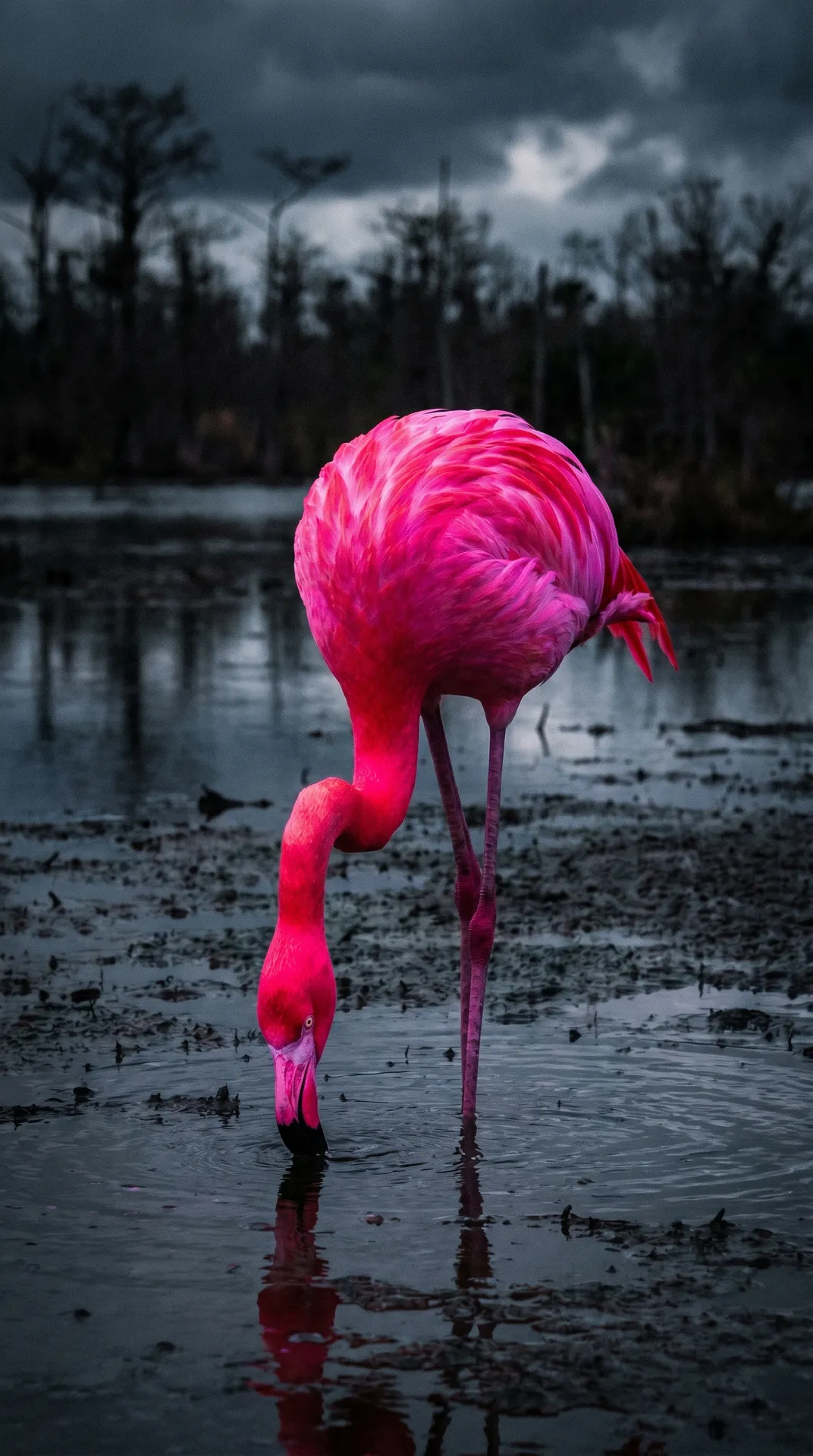
- ✓The Flamingo eats completely upside down, with its head flipped over underwater to strain food through a built-in filter in its beak.
- ✓The Flamingo feeds its chicks a bright red milk produced in the throat, rich enough to temporarily fade the parents pale.
The Flamingo is about 1.2× as long as a 7-year-old! 🤯
The full story
Flamingos are not actually born pink. They hatch a dull, boring grey, and they have to earn their color by eating it. Meet one of the most misunderstood birds in the entire world. Their famous pink comes from tiny pigments called carotenoids, found in the algae and brine shrimp they filter out of the water. The more of it they eat, the brighter pink they glow. A flamingo with a poor diet actually fades back to a pale, washed-out white. But the weirdness does not stop there. They eat completely upside down, with their heads flipped over in the water, straining food through a built-in filter in their beak. And to feed their chicks, both parents produce a bright red milk from their throat, so rich it can turn the parents themselves temporarily pale. Born grey, then dyed pink by dinner. Follow for more weird animal facts.
A flamingo's food (algae and brine shrimp) is packed with natural orange-red coloring chemicals called carotenoids. When the flamingo digests its meal, its body breaks these chemicals down and carries the pink color into its growing feathers, legs, and bill, so the bird literally builds its color out of what it eats. A chick hatches grey because it hasn't eaten enough yet; if any flamingo eats a poor, carotenoid-low diet, no new pink gets stored and it fades toward white. Parents make red 'crop milk' in their throat that is loaded with these same pigments, so giving it away drains their own color and turns them temporarily pale.
📚 Source: Why Are Flamingos Pink? And Other Flamingo Facts — Smithsonian's National Zoo ↗Scientists confirmed the diet link by raising flamingos in zoos and watching captive birds turn pale, then regain pink only when keepers added carotenoid pigments (like canthaxanthin) to their food, and lab tests show those same pigments inside the feathers and the red crop milk.
📚 Source: Crop milk — Wikipedia (citing flamingo carotenoid research) ↗Watch the 45-second version
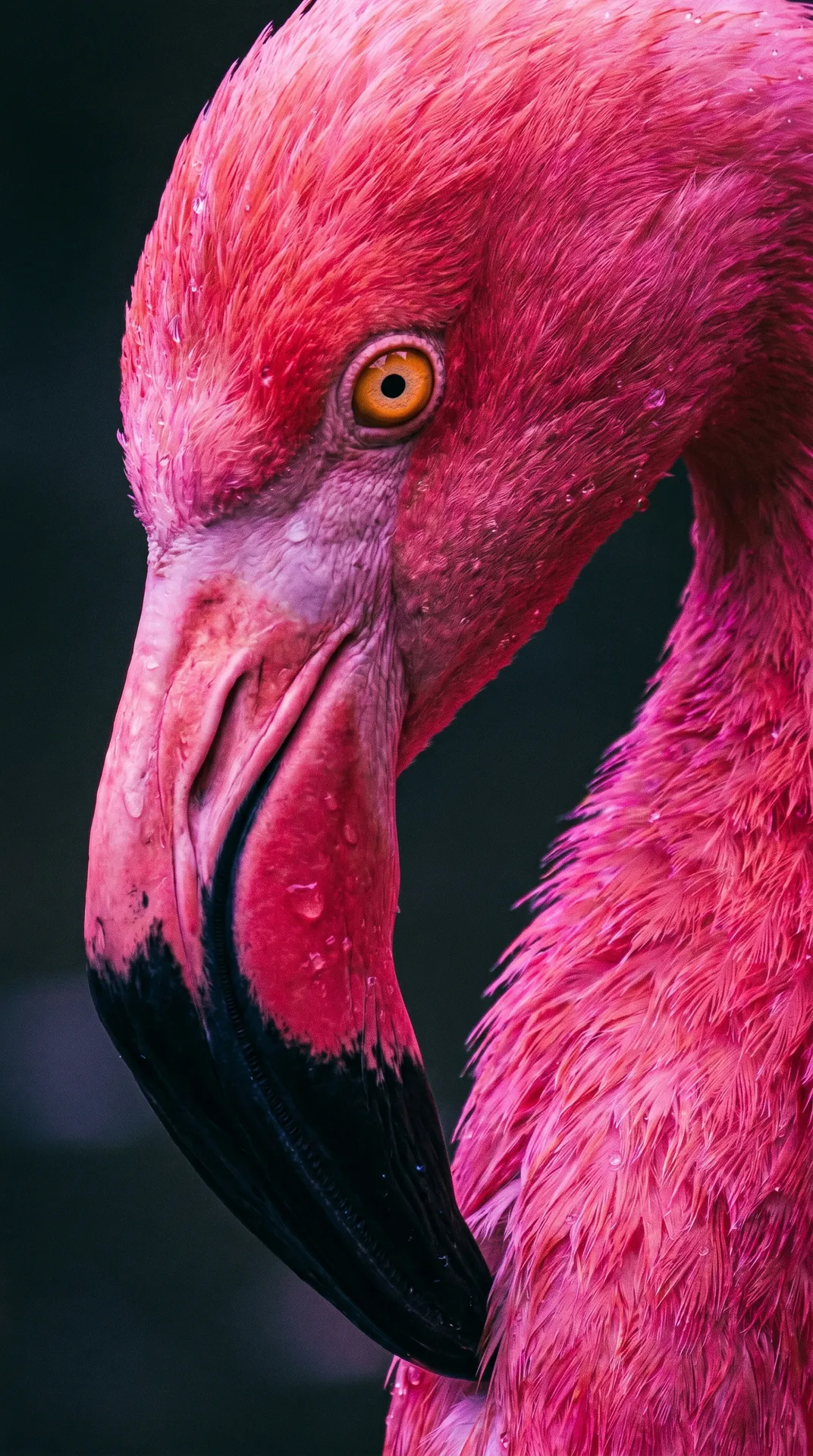
Flamingo gallery
Check what you learned
No score, no pressure — just see what stuck. Tap Real or Fake.
“The Flamingo turns its own color pink by eating it, since it hatches a dull grey.”
“The Flamingo inflates a brilliant scarlet throat pouch the size of a balloon to win a mate.”
“The Flamingo gets its color from carotenoid pigments in the algae and brine shrimp it filter-feeds.”