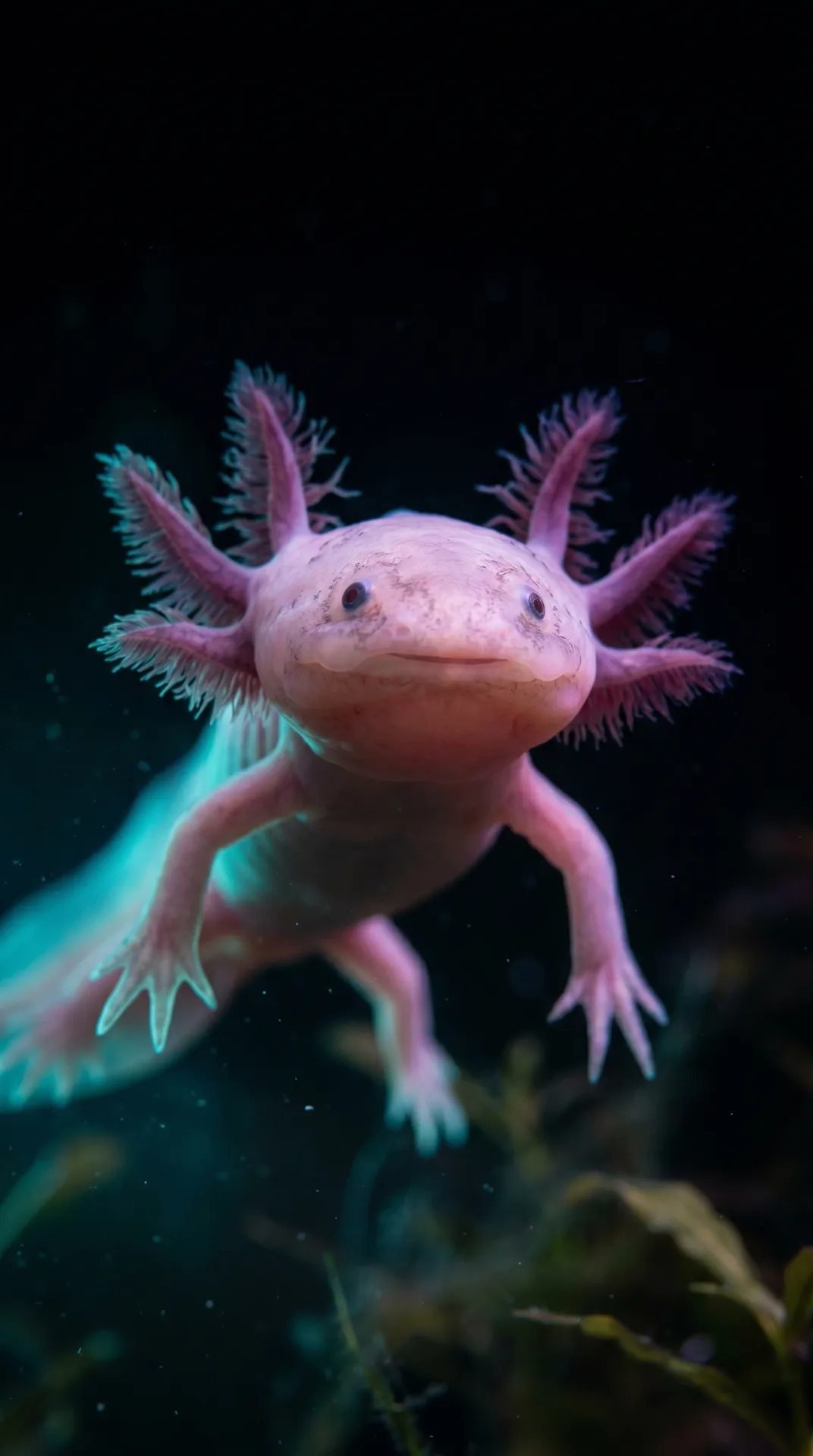
The animal that can regrow its own brain
This animal can regrow almost any part of its body — including parts of its brain.
Which one is REALLY true about the Axolotl?
The short version
The axolotl is a salamander that never grows up. It regrows lost legs, its heart, spine, eyes and even parts of its brain — perfectly, with no scarring. Scientists study it to understand human healing.
Why it's so weird
- ✓The Axolotl can its legs, heart, spine, eyes and even parts of its brain.
- ✓The Axolotl lost body parts perfectly, with no scarring at all.
- ✓The Axolotl can accept a transplanted limb from another axolotl and use it as its own.
- ✓The Axolotl stays in its baby form for its whole life, keeping a permanent smile.
You could line up about 4 of them along a 7-year-old!
The full story
This animal can regrow almost any part of its body, including parts of its brain. Meet the axolotl, a salamander that basically never grows up. If it loses a leg, it just grows a brand new one. Bones, muscles, nerves and all, with no scarring at all. But it does not stop at legs. Axolotls can regenerate their heart, their spine, their eyes, and even pieces of their brain, and then use them like nothing ever happened. Scientists are studying them right now to understand how human healing might work one day. They can even accept a whole transplanted limb from another axolotl, and just start using it like it was always theirs. Oh, and that adorable permanent smile? It never goes away, because the axolotl stays in its baby form for its entire life. Nature's real-life superhero. Follow for more weird animals.
When an axolotl loses a leg, nearby cells return to a simpler, baby-like state and form a special blob called a blastema. These cells remember which part of the leg was lost, so they rebuild only the missing piece. A signal chemical called retinoic acid acts like a position marker that helps cells know how far up the limb they are, so they build the right segments. Very little scar forms, which lets the new limb grow back cleanly. The axolotl also stays in its baby form for life because its body makes very little of the 'grow-up' thyroid hormone.
📚 Source: The axolotl limb blastema: cellular and molecular mechanisms driving blastema formation and limb regeneration in tetrapods (PMC, NIH) ↗Scientists proved the axolotl's 'stay-a-baby' trait comes from low thyroid hormone by feeding or injecting it with thyroid hormone (thyroxine) in the lab, which forced it to grow up, lose its gills, and turn into a land salamander.
📚 Source: Rediscovering the Axolotl as a Model for Thyroid Hormone Dependent Development (Frontiers in Endocrinology, PMC) ↗Watch the 45-second version
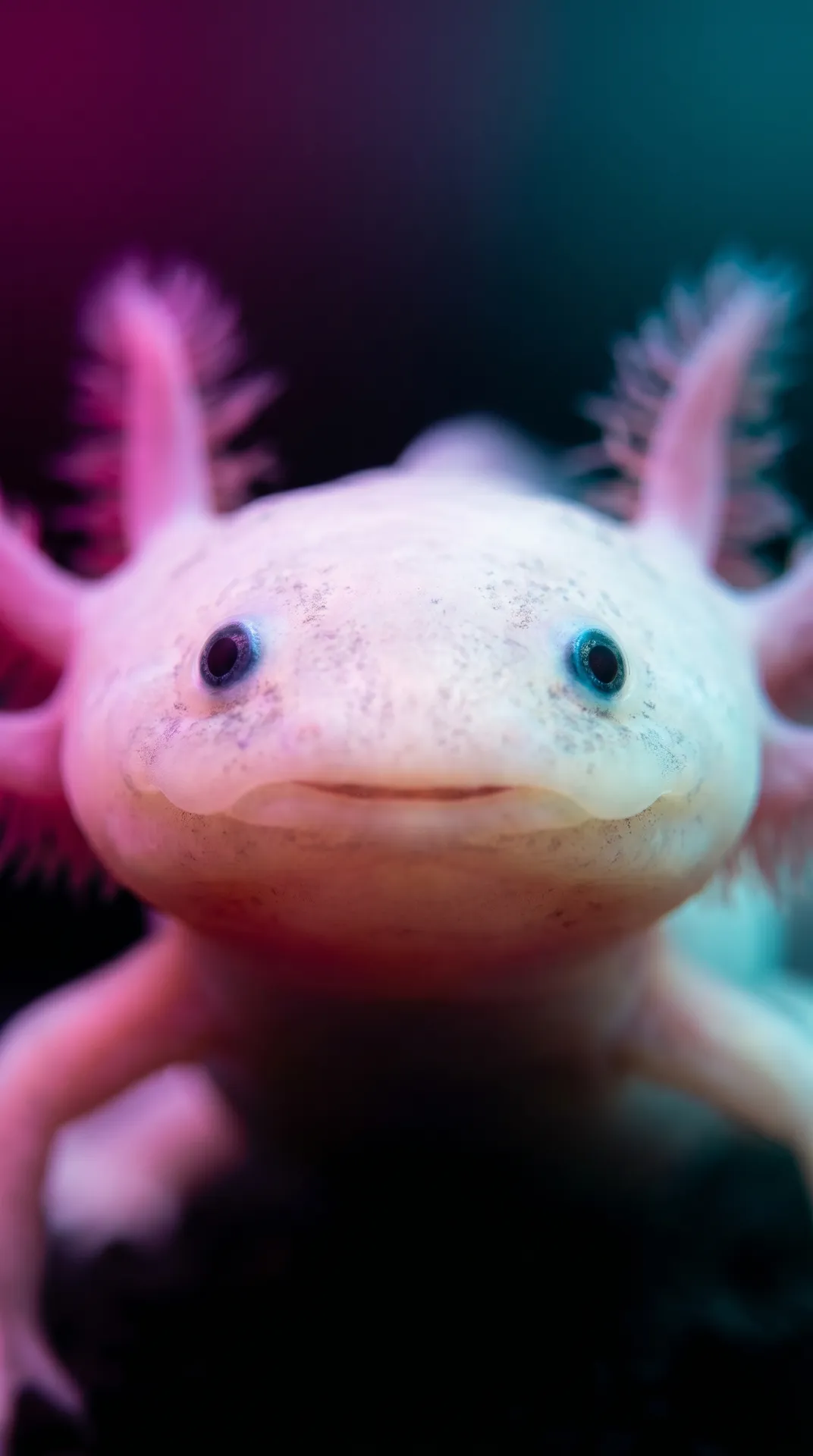
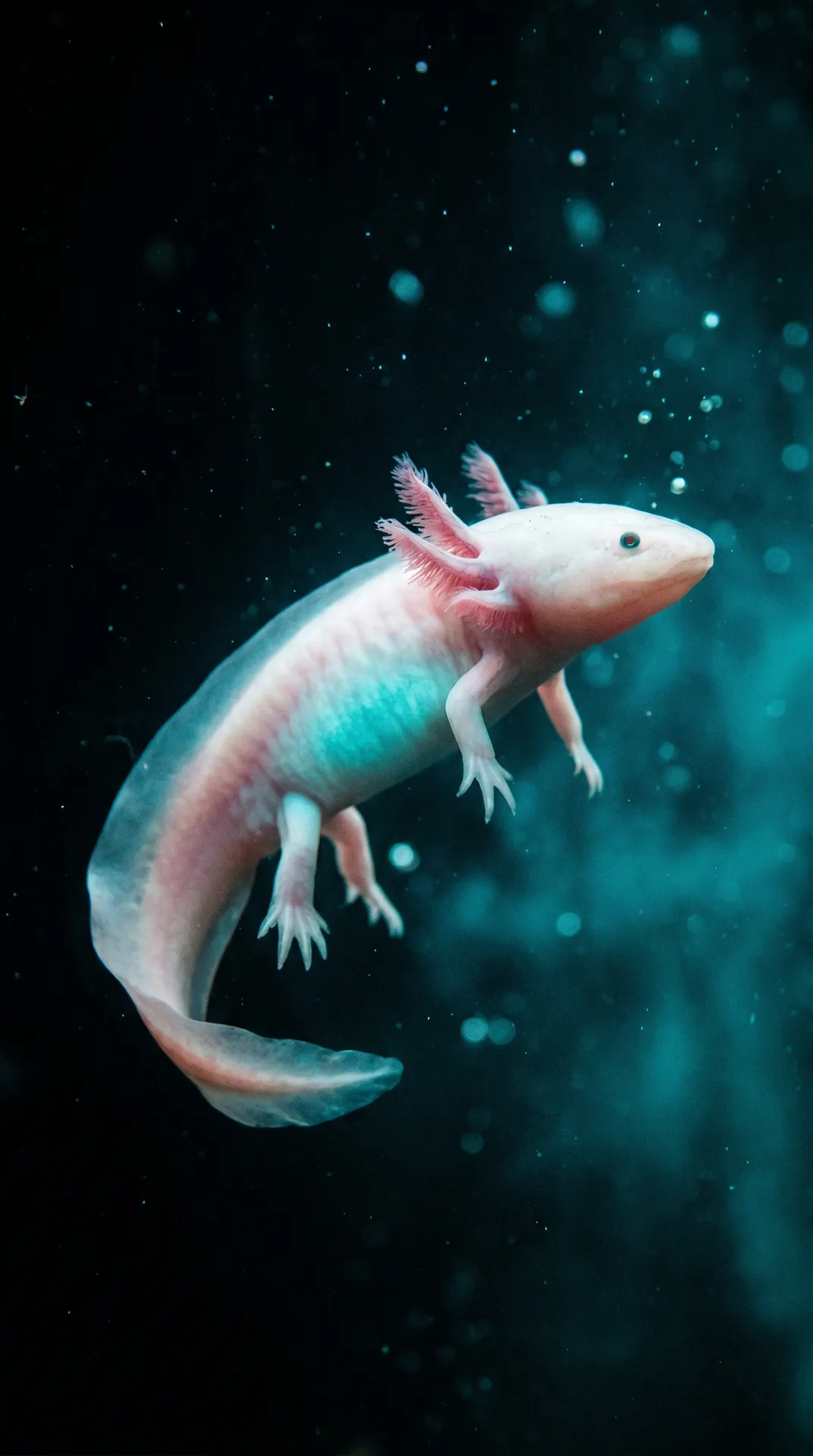
Axolotl gallery
Check what you learned
No score, no pressure — just see what stuck. Tap Real or Fake.
“The Axolotl can regrow its legs, heart, spine, eyes and even parts of its brain.”
“The Axolotl is a nocturnal lemur from the island of Madagascar.”
“The Axolotl regrows lost body parts perfectly, with no scarring at all.”