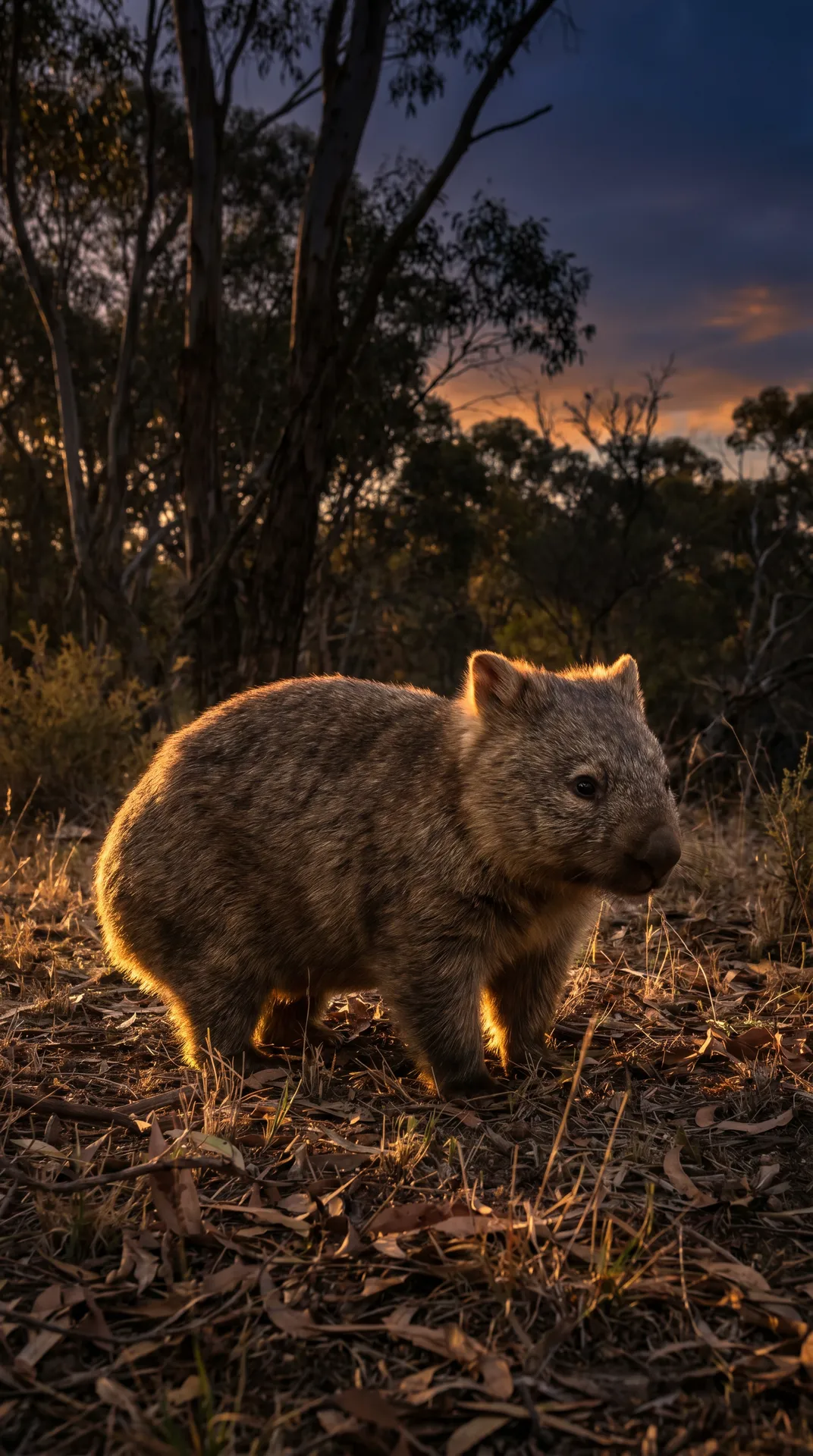
Wombats poop perfect cubes
Wombats poop perfect cubes — and no, their butt isn't square.
Which one is REALLY true about the Wombat?
The short version
A wombat's intestines stretch unevenly, drying the poop into neat little blocks. One wombat drops up to 100 cubes a night and stacks them on rocks to mark territory.
Why it's so weird
- ✓The Wombat poops in perfect cube shapes.
- ✓The Wombat can drop up to 100 cube-shaped poops in a single night.
- ✓The Wombat stacks its poop cubes on rocks and logs to mark its territory.
- ✓The Wombat molds the cubes with an unevenly stretchy intestine.
The Wombat is about the same length as a 7-year-old.
The full story
Okay, this might genuinely be the weirdest thing in all of nature. Wombats poop perfect little cubes. Actual cubes, with flat sides and clean edges. And no, before you ask, their butt is not square. So how does this even happen? As the poop slowly moves through the last part of their intestine, the walls stretch unevenly, some parts stiff and some parts stretchy, and that gradually molds it into neat little blocks before it dries out. A single wombat can drop around eighty to a hundred of these cubes every single night. And here is the best part. They actually stack them on top of rocks and logs to mark their territory, because the cube shape stops them from rolling away. Cube-shaped poop, used as a flex. Nature is just showing off. Follow for more weird animals.
The cube isn't made by a square bottom. It's molded inside the wombat's very long intestine. The last part of the gut has walls with stiff stripes and stretchy stripes running along it. As the poop slowly squeezes past (digestion can take up to two weeks), the stiff parts press in to make flat sides while the stretchy parts let the corners form. The poop also dries out near the end, so by the time it leaves it holds its blocky shape.
📚 Source: Studying Wombats' Cubic Poop — Georgia Tech Quantitative Biosciences ↗Scientists led by David Hu (Georgia Tech) and Scott Carver (University of Tasmania) dissected wombat intestines, measured how stiff different parts of the gut wall were, and built cloth-and-math models showing the alternating stiff and stretchy zones shape the cubes (Ig Nobel Prize 2019; published in Soft Matter, 2021).
📚 Source: Wombats make cube-shaped poop, thanks to unique intestines — Science (AAAS) ↗Watch the 45-second version
Wombat gallery
Check what you learned
No score, no pressure — just see what stuck. Tap Real or Fake.
“The Wombat poops in perfect cube shapes.”
“The Wombat can freeze into a solid lump of ice every winter and thaw back to life in spring.”
“The Wombat can drop up to 100 cube-shaped poops in a single night.”