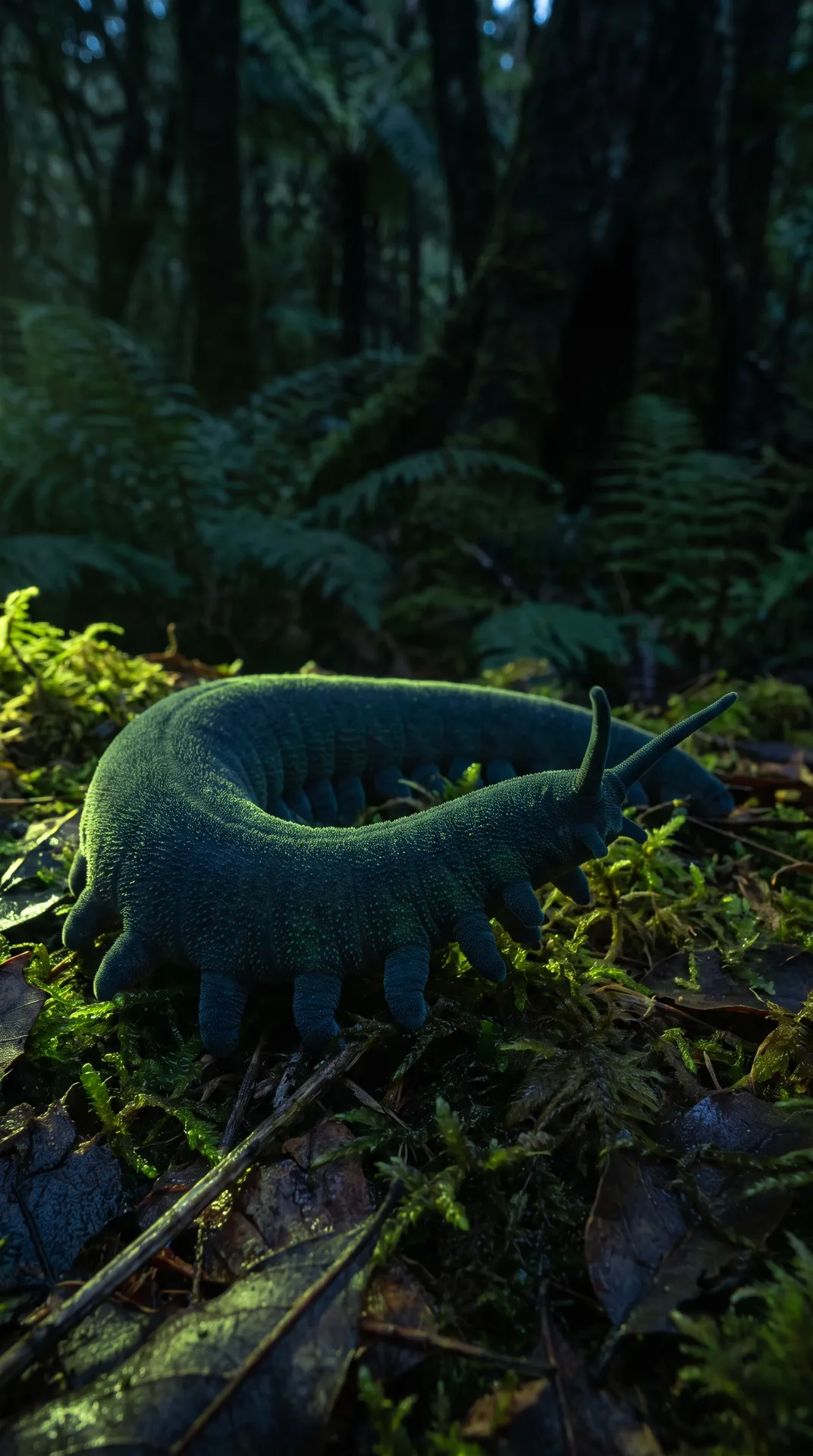
The ancient worm that fires jets of sticky slime to catch prey
This ancient little worm hunts by firing two jets of sticky slime like a net.
Which one is REALLY true about the Velvet Worm?
The short version
The velvet worm, nearly unchanged in 500 million years, hunts by squirting two whipping streams of sticky slime from nozzles beside its mouth, gluing prey in a net. It then bites in, injects digestive saliva to liquefy the insides, and even eats its own dried slime to waste nothing.
Why it's so weird
- ✓The Velvet Worm hunts by firing two jets of sticky slime from nozzles beside its mouth.
- ✓The Velvet Worm whips the slime side to side to cover in a tangled net.
- ✓The Velvet Worm has barely changed in five hundred million years.
- ✓The Velvet Worm injects saliva that turns its 's insides to soup before slurping it up.
- ✓The Velvet Worm eats its own dried slime afterward so that nothing goes to waste.
You could line up about 8 of them along a 7-year-old!
The full story
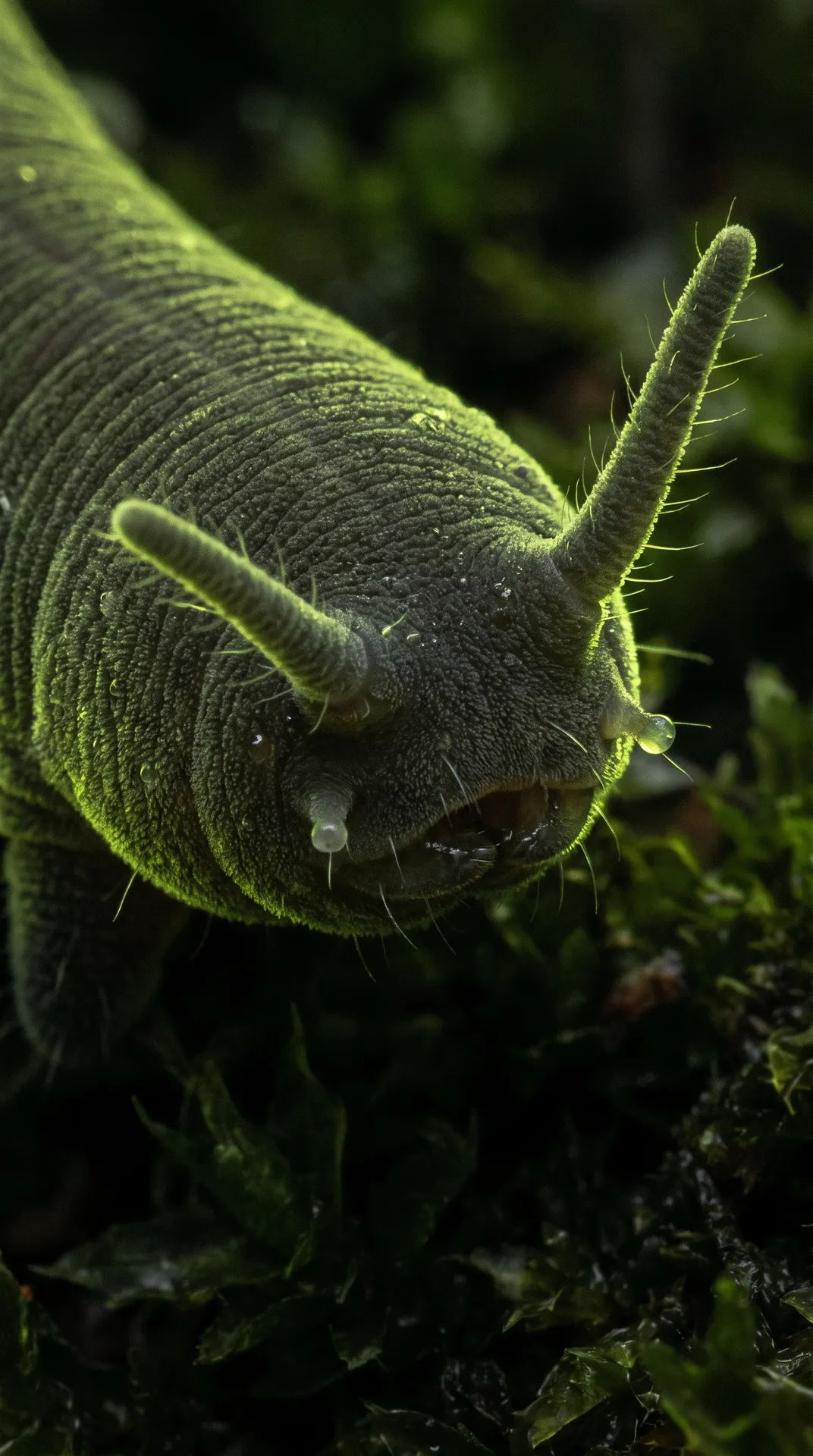
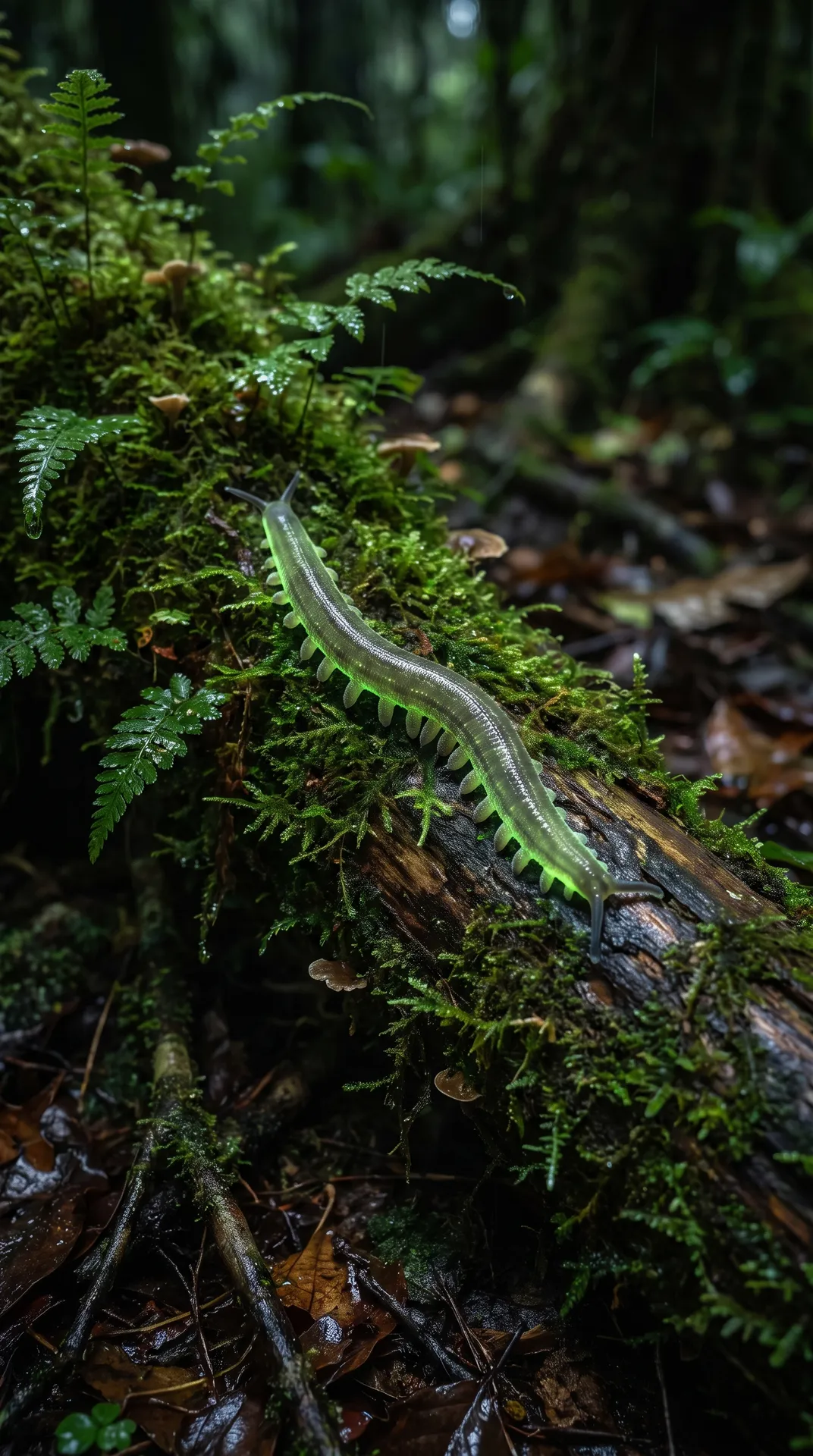
This soft little creature hunts by firing two jets of glue right out of its face. Meet the velvet worm, an ancient animal that has barely changed in five hundred million years. It creeps along the forest floor on dozens of stubby, squishy legs, looking almost like a caterpillar crossed with a slug. When it senses prey nearby, it aims two nozzles beside its mouth and squirts twin streams of sticky slime, whipping them side to side to cover the victim in a tangled net. The slime hardens in seconds, gluing the prey in place, totally helpless. Then the velvet worm strolls over, bites in, and injects saliva that turns the insides to soup before slurping it all up. It even eats its own dried slime afterward, so that nothing goes to waste. Follow for more weird animal facts.
The worm keeps its slime as a watery liquid packed with tiny protein blobs, stored in glands inside its body. To fire, it squeezes this liquid super-fast through two soft, floppy nozzles beside its mouth. No muscles aim the nozzles - the jet shoots out so fast that it makes the bendy nozzles flap on their own, which is why the slime whips side to side. As the flying threads stretch and hit the air, those protein blobs snap together into sticky, stiffening strands that harden into a tangled net.
📚 Source: Oscillation of the velvet worm slime jet by passive hydrodynamic instability - Nature Communications (Concha et al., 2015) ↗Scientists filmed velvet worms squirting with high-speed cameras and built a working physical model, showing the nozzles flap about 30 to 60 times a second all by themselves because the fluid rushes out faster than any muscle could move.
📚 Source: Oscillation of the velvet worm slime jet by passive hydrodynamic instability - Nature Communications (Concha et al., 2015) ↗Watch the 45-second version
Watch it on the channel.
Velvet Worm gallery
Check what you learned
No score, no pressure — just see what stuck. Tap Real or Fake.
“The Velvet Worm hunts by firing two jets of sticky slime from nozzles beside its mouth.”
“The Velvet Worm builds its nest by stitching living leaves together while they are still growing on the tree.”
“The Velvet Worm whips the slime side to side to cover prey in a tangled net.”