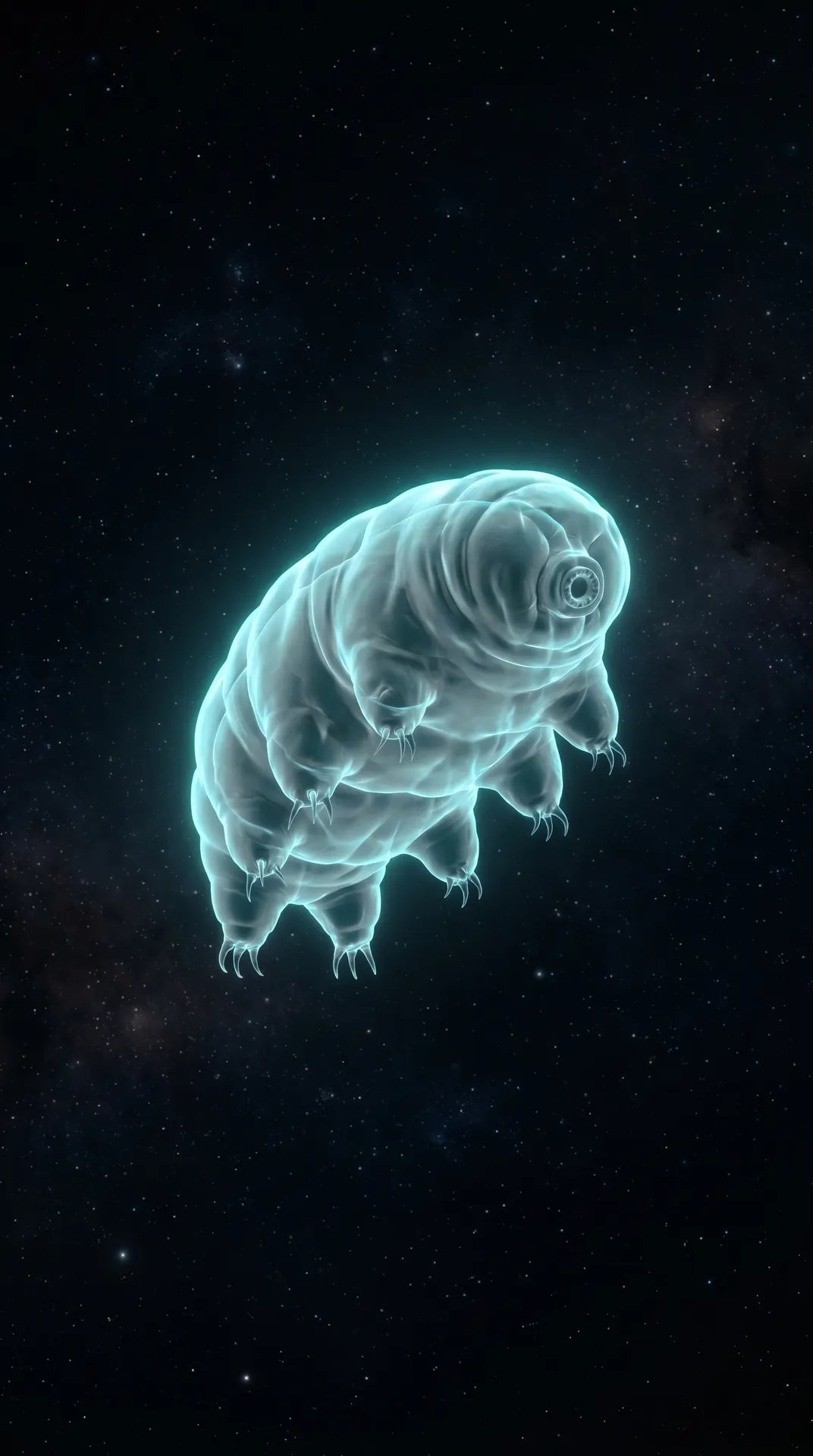
The animal that survived outer space
This animal got launched into the vacuum of space, unprotected — and survived.
Which one is REALLY true about the Tardigrade?
The short version
The tardigrade ('water bear') is smaller than a grain of sand and nearly indestructible — surviving near absolute zero, boiling, radiation, crushing pressure, and the vacuum of space. It can dry out into a 'tun' and switch off for up to 30 years, then revive with a drop of water.
Why it's so weird
- ✓The Tardigrade survived the raw vacuum of space, completely unprotected.
- ✓The Tardigrade can survive being frozen near absolute zero, boiled, irradiated and crushed.
- ✓The Tardigrade can dry into a ball called a tun and switch itself off for up to 30 years.
- ✓The Tardigrade is smaller than a grain of sand, yet revives with a single drop of water.
You could line up about 1017 of them along a 7-year-old!
The full story
This animal got launched into the vacuum of outer space, completely unprotected, and it survived. Meet the tardigrade, also known as the water bear, and it is basically indestructible. It is smaller than a grain of sand, but it can survive almost anything that would instantly kill us. It can handle being frozen to nearly absolute zero, boiled past the boiling point, blasted with radiation, and crushed by pressure deeper than the bottom of the ocean. When things get really bad, it just squeezes out all of its water, curls into a tiny ball called a tun, and basically switches itself off for up to thirty years. Then you add a single drop of water, and it comes right back to life. A microscopic creature that simply refuses to die. Follow for more weird animals.
The tardigrade's secret is drying out on purpose. When its water disappears, it pulls in its head and legs and curls into a ball called a "tun," pushing out almost all of its water so its body chemistry nearly stops. To keep its squished cells and DNA from breaking while dry, it makes special protective molecules (including proteins scientists call CAHS, which turn the inside of the cell into a glass-like solid, and one nicknamed Dsup that shields its DNA). With its body switched off and protected this way, there is almost nothing left for cold, heat, radiation, or empty space to damage until water returns and wakes it up. Scientists are still working out exactly how all these tricks work together.
📚 Source: Research Organism Superheroes: Tardigrades — National Institute of General Medical Sciences (NIH) ↗In 2007 the European Space Agency's FOTON-M3 mission carried dried tardigrades on the outside of a spacecraft and exposed them to the raw vacuum of space for 10 days. Most survived the vacuum after returning to Earth and could still lay healthy eggs (though harsh sunlight in space was much tougher on them).
📚 Source: Tardigrades survive exposure to space in low Earth orbit — Current Biology (Jönsson et al., 2008) ↗Watch the 45-second version
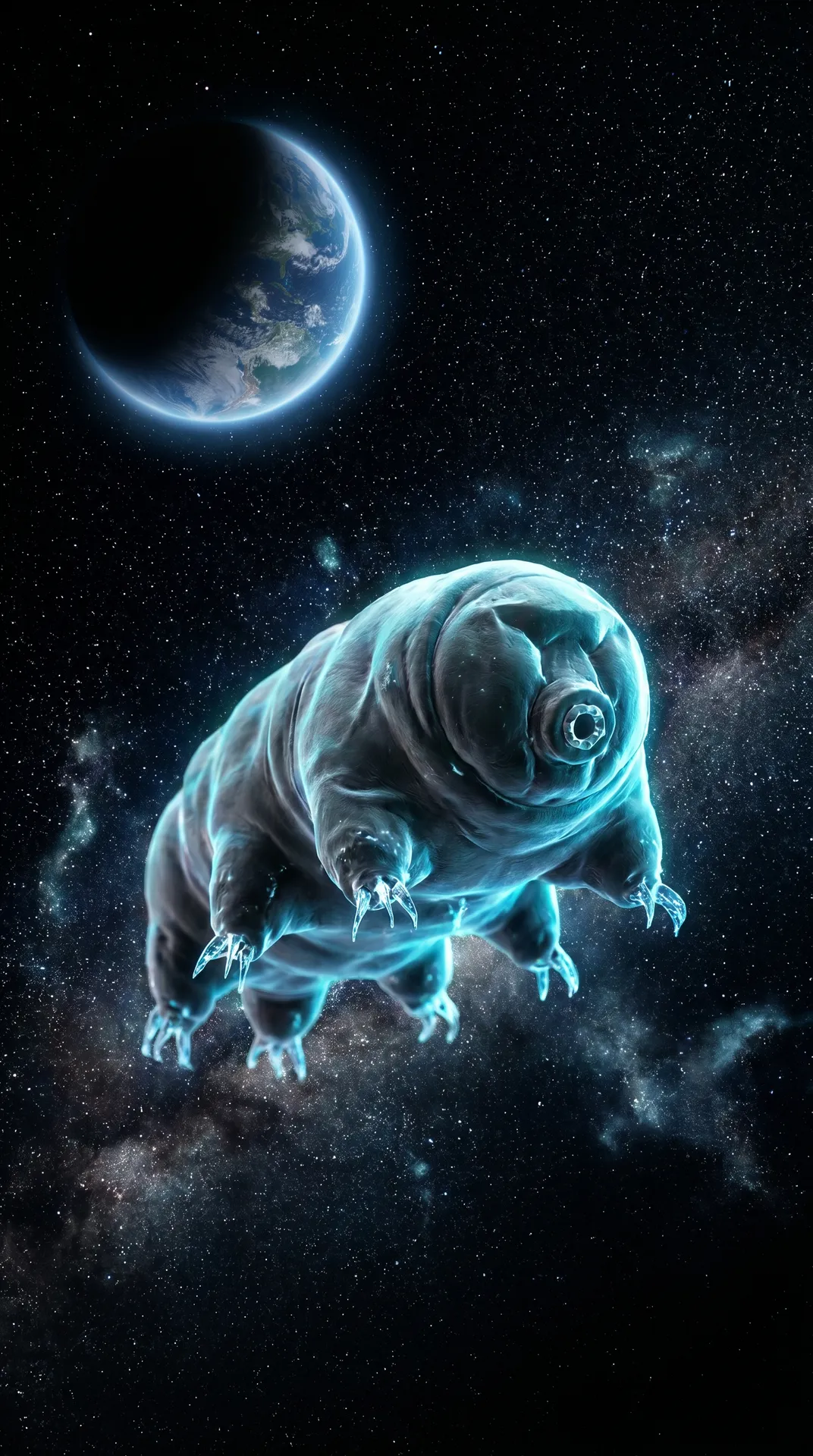
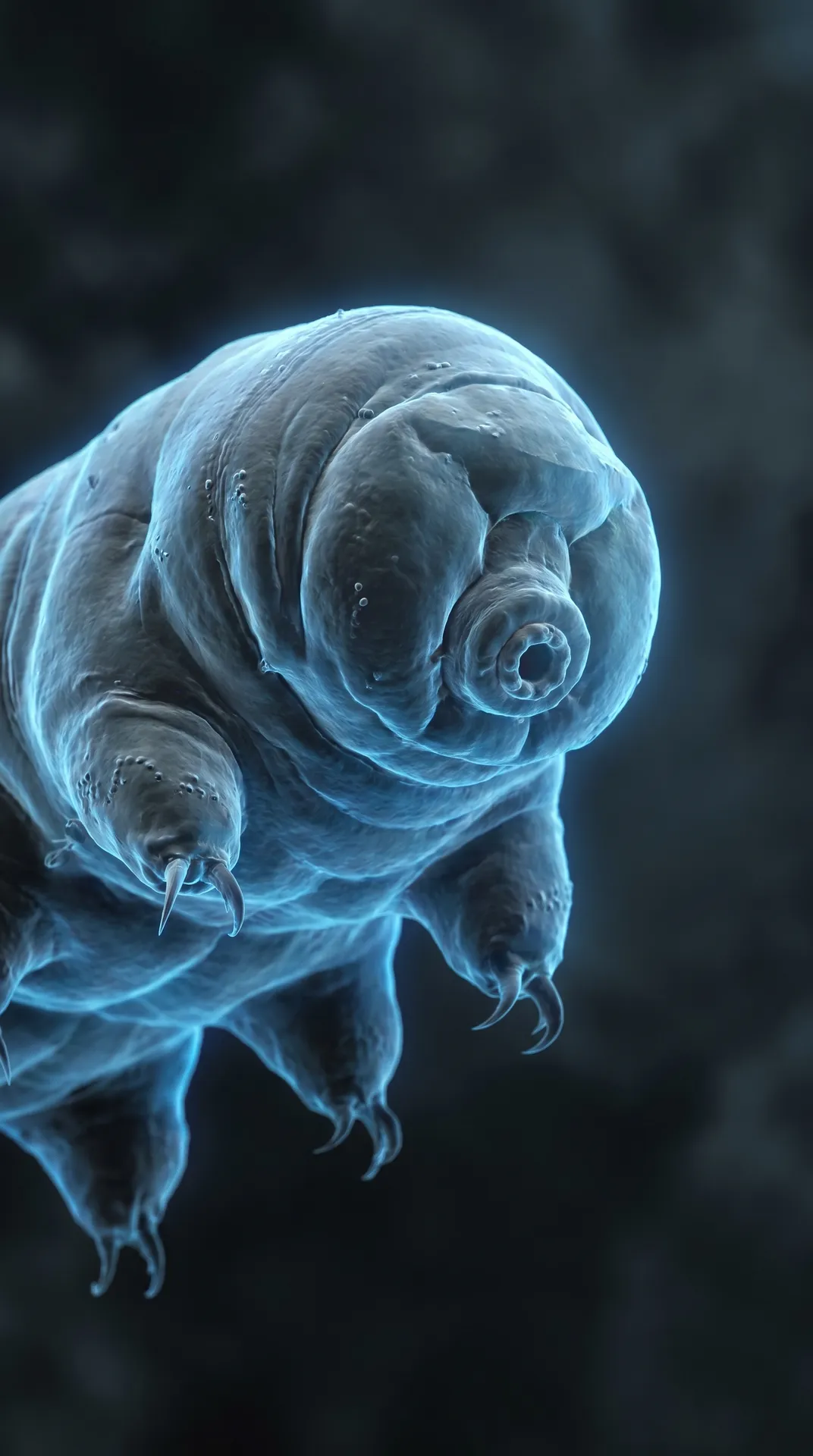
Tardigrade gallery
Check what you learned
No score, no pressure — just see what stuck. Tap Real or Fake.
“The Tardigrade survived the raw vacuum of space, completely unprotected.”
“The Tardigrade can rotate its head almost a full half-circle in each direction, just like an owl.”
“The Tardigrade can survive being frozen near absolute zero, boiled, irradiated and crushed.”