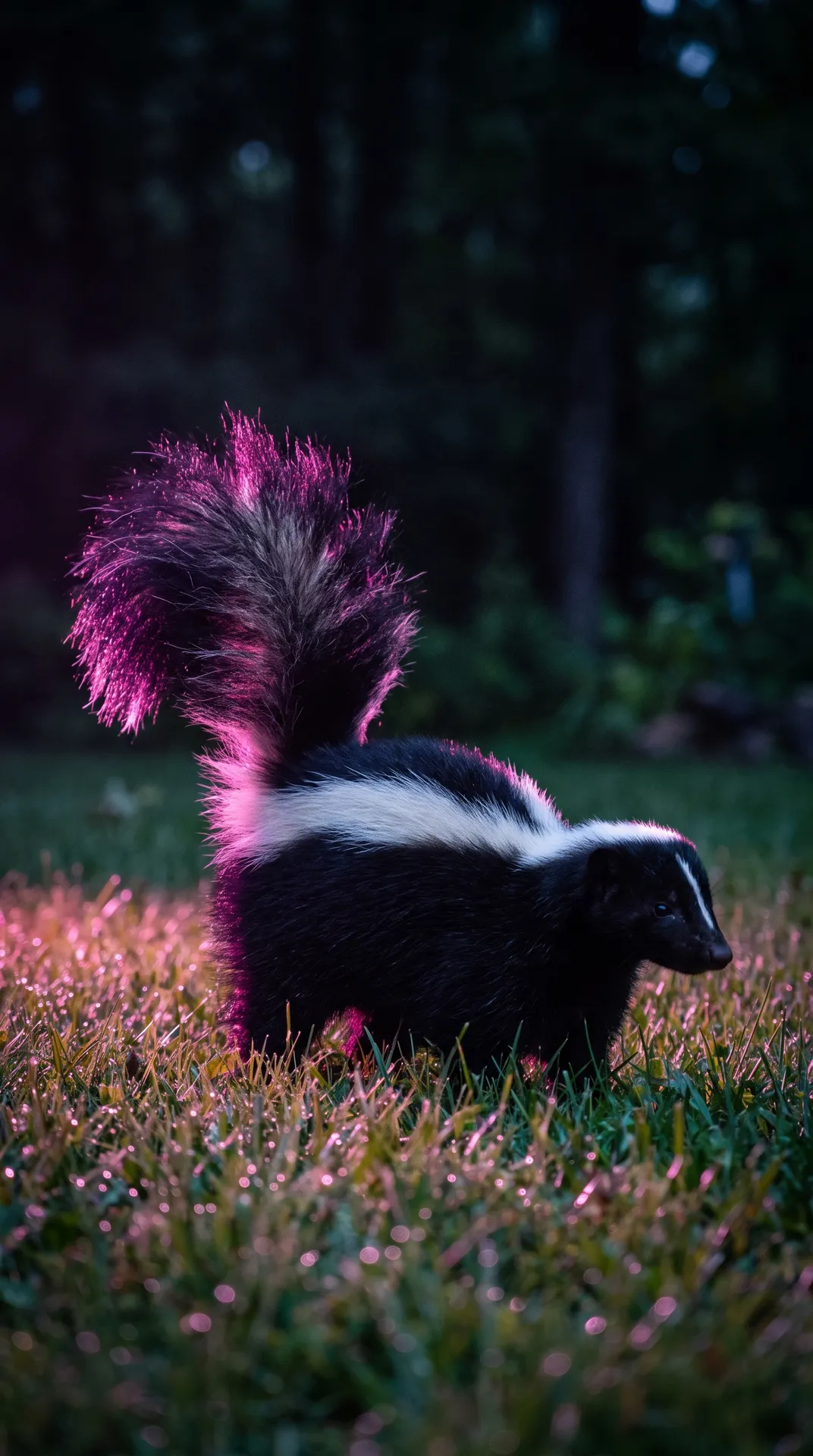
The backyard animal that's basically a walking chemical weapon
This animal can fire a burning chemical spray accurately from ten feet away.
Which one is REALLY true about the Skunk?
The short version
The skunk fires an oily, sulfur-based spray from glands under its tail, aiming accurately up to ~10 feet; the smell carries over a mile and a hit can cause burning eyes and temporary blindness. It warns first by stomping, hissing, and raising its tail (spotted skunks do a handstand), and only carries ~5-6 shots before needing days to reload.
Why it's so weird
- ✓The Skunk fires an oily, sulfur-based spray from two glands under its tail.
- ✓The Skunk can aim its spray with shocking accuracy up to about ten feet away.
- ✓The Skunk sprays a smell so strong that people can detect it over a mile downwind.
- ✓The Skunk can cause burning eyes and even temporary blindness with a direct hit.
- ✓The Skunk warns you first by stomping, hissing, and raising its tail, and the spotted skunk even does a handstand.
You could line up about 2 of them along a 7-year-old!
The full story
This cute little animal is basically a walking chemical weapon. Meet the skunk, famous for one of the most powerful defenses in the entire animal kingdom. Under its tail sit two glands that fire a spray of oily, sulfur-based chemicals, which it can aim with shocking accuracy up to about ten feet away. The smell is so strong that people can detect it over a mile downwind, and a direct hit can cause burning eyes and even temporary blindness. But a skunk would much rather warn you first. It stomps its feet, hisses, and raises its tail, and the spotted skunk even does a full handstand to look bigger before it fires. It only carries enough spray for around five or six shots, then needs days to reload. So if one ever gives you the warning dance, take it very seriously. Follow for more weird animal facts.
Inside two glands under a skunk's tail sits an oily liquid packed with sulfur molecules called thiols — the same smelly kind of chemistry found in rotten eggs and onions. When the skunk is scared, rings of muscle squeeze those glands and shoot the oil out through two tiny nipple-like nozzles it can point like a squirt gun, which is how it aims so well. Thiols are strong irritants, so a direct hit stings the eyes and nose, and because the droplets are oily and float easily through the air, the smell drifts far and clings for days.
📚 Source: Britannica — Why Do Skunks Spray? Defense Mechanism, Scent Glands, & Facts ↗Chemist Dr. William F. Wood at Humboldt State University collected real skunk spray and analyzed it in the lab, identifying the exact sulfur thiol (and thioacetate) molecules that create the smell.
📚 Source: Dr. William F. Wood — Chemical Constituents of Skunk Spray, Humboldt State University ↗Watch the 45-second version
Watch it on the channel.
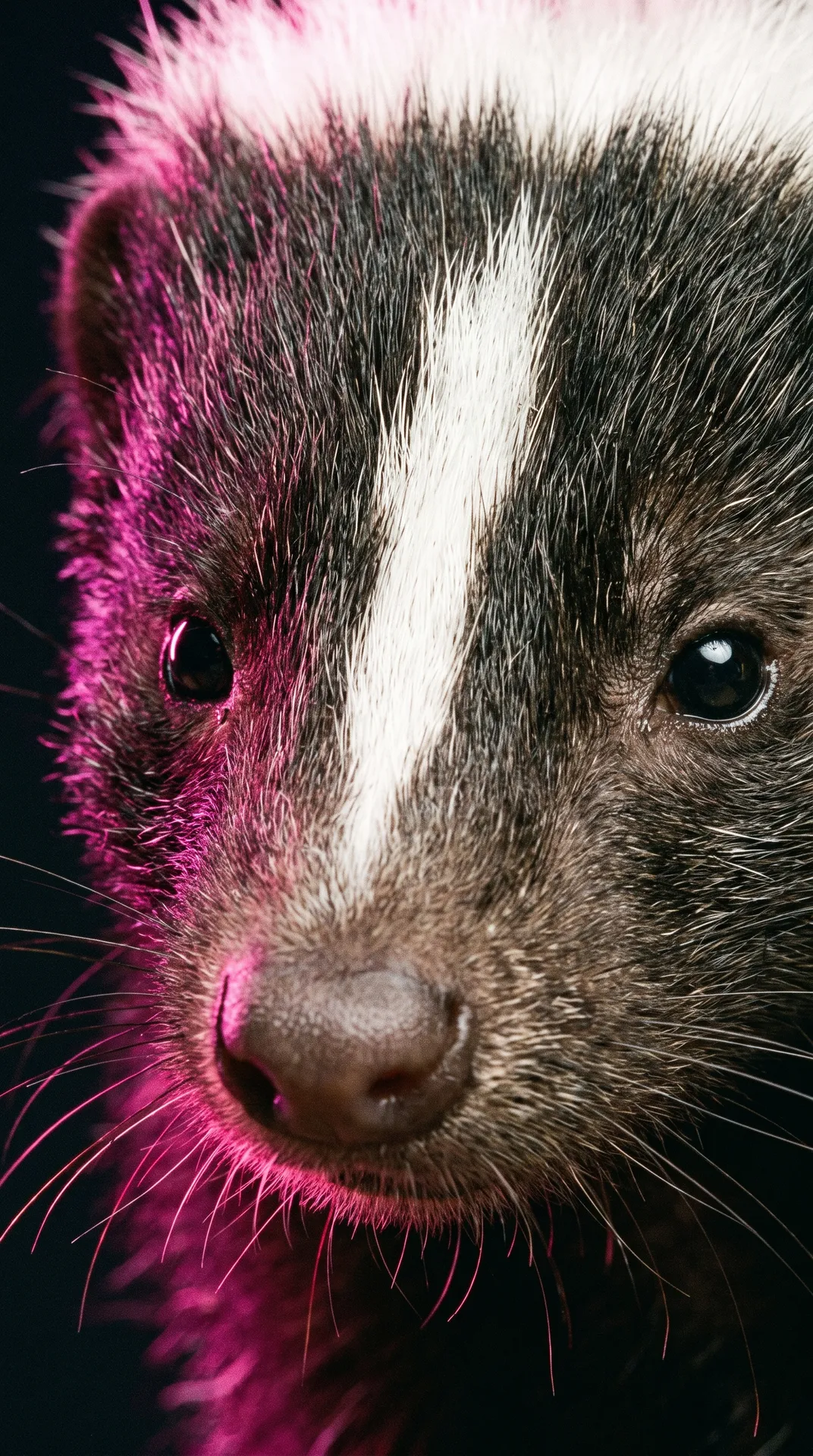
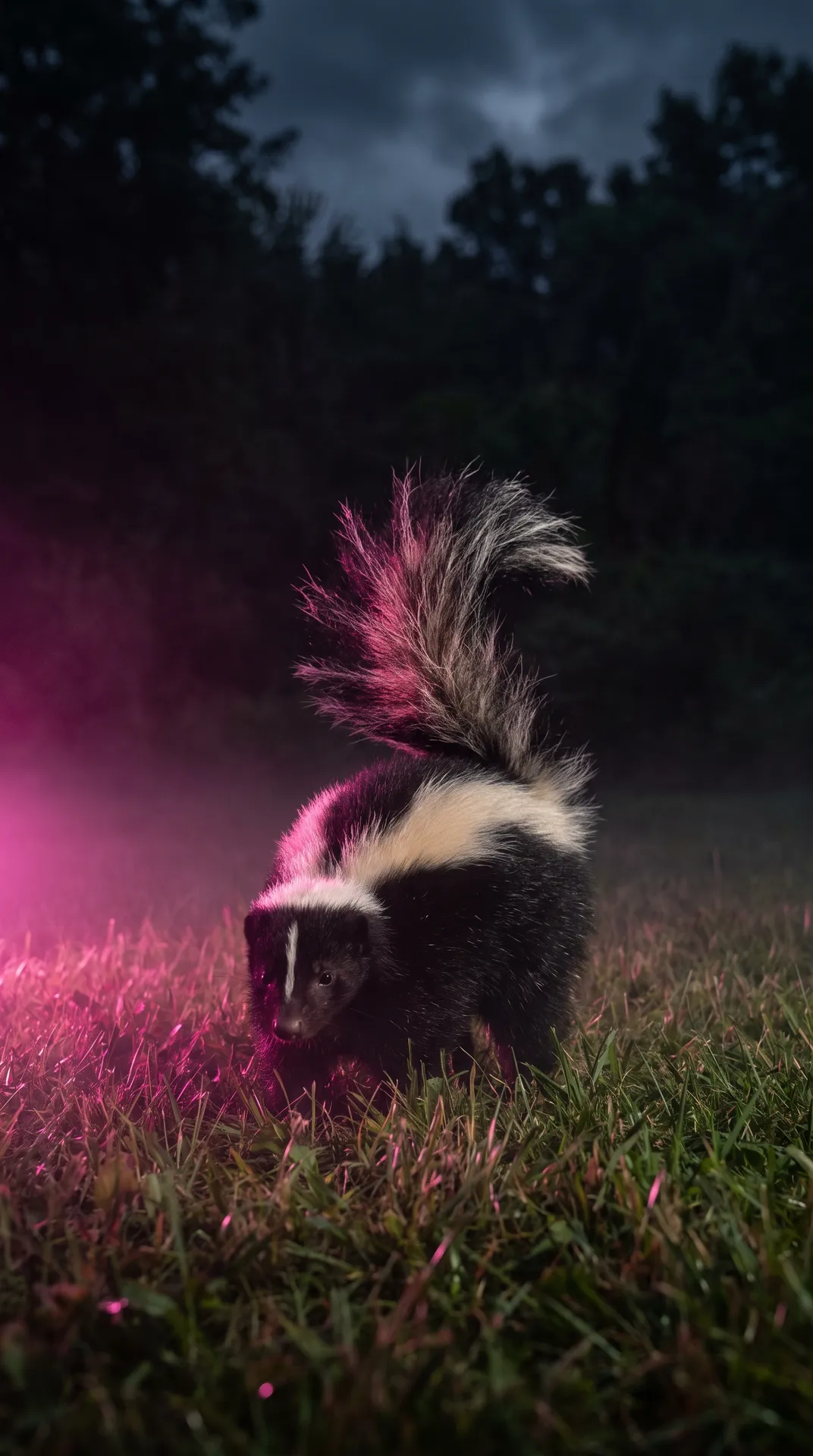
Skunk gallery
Check what you learned
No score, no pressure — just see what stuck. Tap Real or Fake.
“The Skunk fires an oily, sulfur-based spray from two glands under its tail.”
“The Skunk only poops about once a week.”
“The Skunk can aim its spray with shocking accuracy up to about ten feet away.”