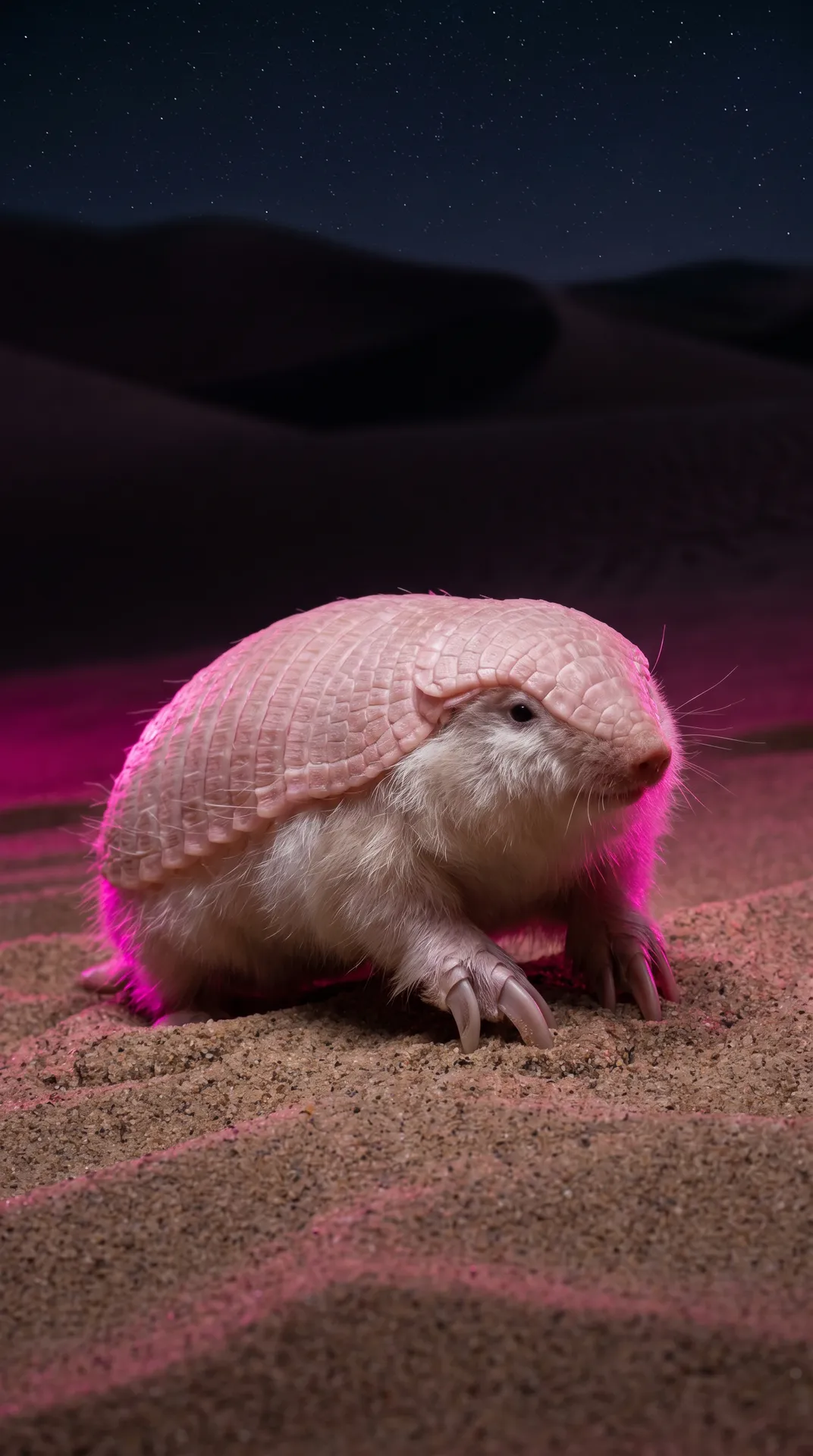
The tiny pink animal that swims through solid sand
This tiny pink animal swims through solid sand and is almost never seen alive.
Which one is REALLY true about the Pink Fairy Armadillo?
The short version
The pink fairy armadillo is the smallest armadillo on Earth (~hand-sized). Its soft shell glows pink because blood flows near the surface to regulate temperature underground. It 'sand-swims' through Argentina's deserts with huge claws, packs soil behind it with a rear plate, and is so rare it's almost never observed alive.
Why it's so weird
- ✓The Pink Fairy Armadillo is the smallest armadillo on Earth, barely the length of your hand.
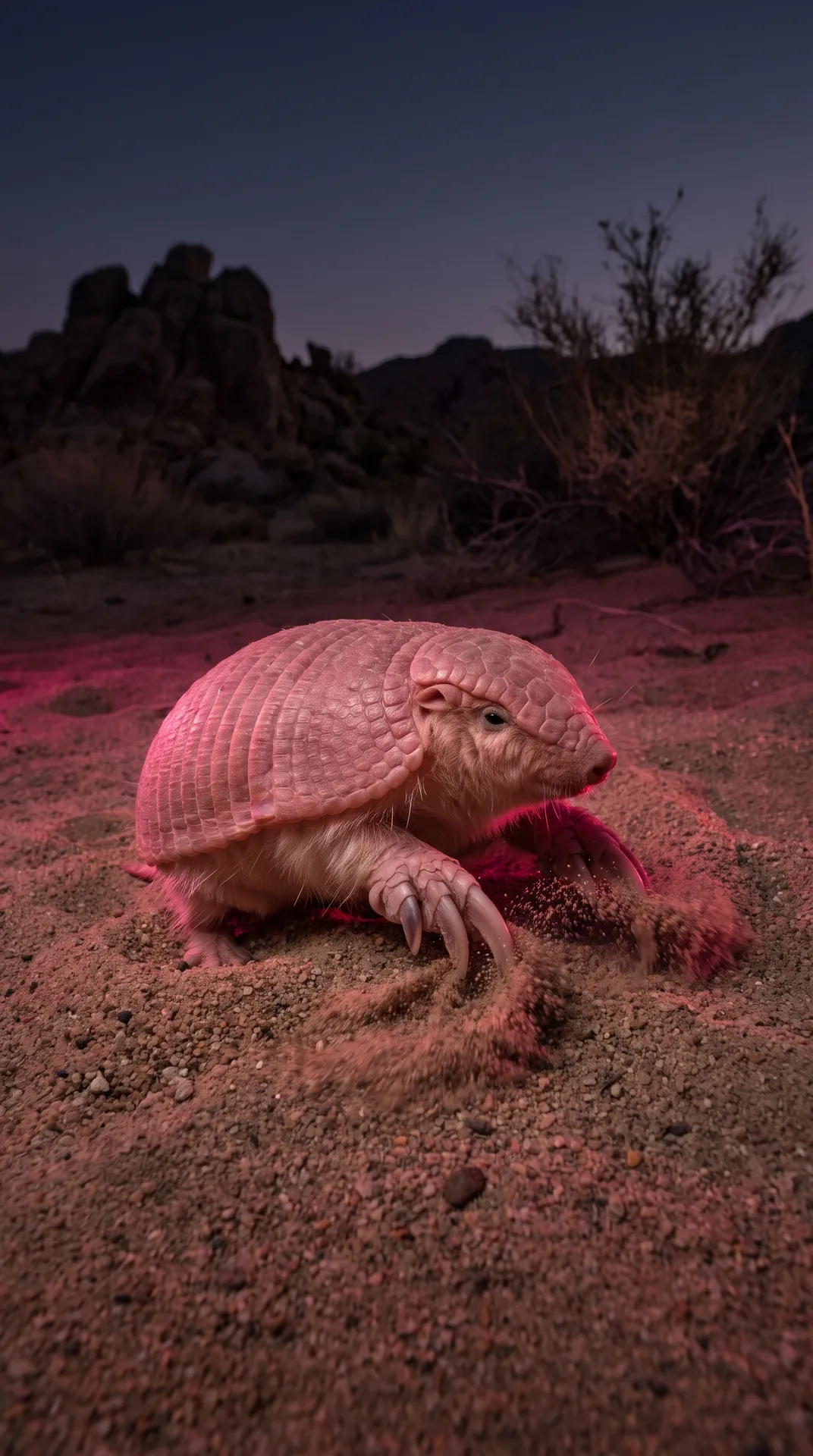
- ✓The Pink Fairy Armadillo can dive into solid ground and swim through sand almost like it is water.
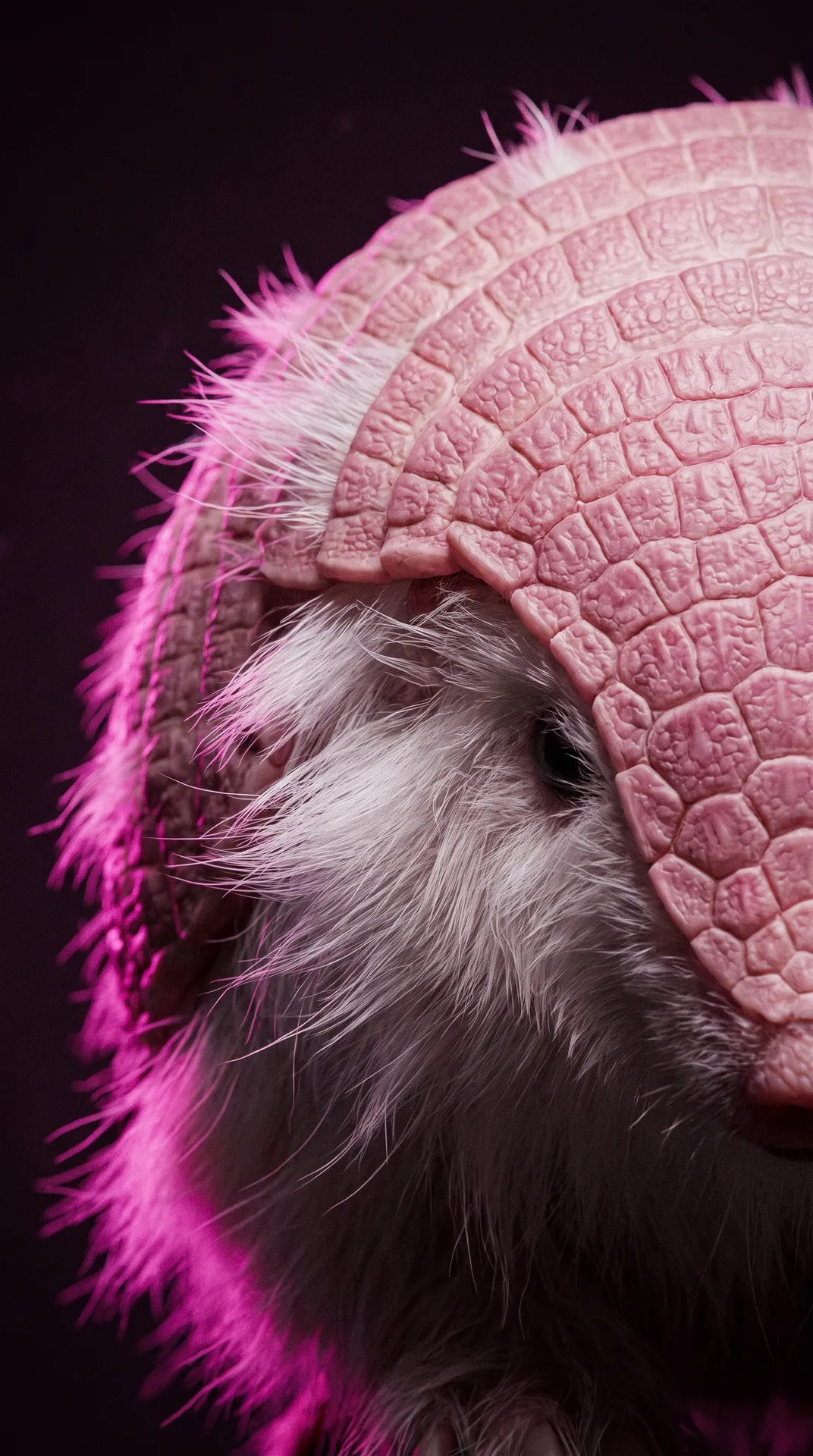
- ✓The Pink Fairy Armadillo has a soft, pale shell that glows pink because blood flows close beneath the surface.
- ✓The Pink Fairy Armadillo uses that blood flow near the surface to control its body temperature underground.
- ✓The Pink Fairy Armadillo has a shell attached only along its spine, like a loose little backpack, with a rear plate that packs soil down behind it as it digs.
You could line up about 8 of them along a 7-year-old!
The full story
This tiny pink creature can dive into solid ground and swim through the sand like it is water. Meet the pink fairy armadillo, the smallest armadillo on Earth, barely the length of your hand. Its soft, pale shell glows a delicate pink because blood flows close to the surface, helping it control its body temperature underground. It lives almost its entire life buried in the dry deserts of Argentina, using huge digging claws to tunnel so fast that people call it the sand swimmer. The shell is only attached along its spine, like a loose little backpack, and a flat armored plate on its rear lets it pack the soil down behind itself as it digs. It is so rare and so shy that scientists have hardly ever managed to observe one alive in the wild. Follow for more weird animal facts.
The pale shell is thin, and tiny blood vessels run right beneath its surface. When the armadillo gets too warm in its burrow, it pumps more blood into those surface vessels so extra heat can leak away into the cool soil, and all that flowing blood is what makes the shell look pink. When it needs to hold heat in, it pulls the blood back toward its body core and the shell fades paler. Scientists think this blood-controlled 'radiator,' plus a layer of fur under the shell, helps this tiny animal stay comfortable underground, though it is so rarely seen that some details are still being studied.
📚 Source: IUCN SSC Anteater, Sloth and Armadillo Specialist Group — Pink Fairy Armadillo Facts for Kids ↗Scientists know how rarely it is seen from field records in Argentina — one local naturalist famous for spotting them reportedly saw only about 12 in 45 years, and with no long-term field studies completed, most of what we understand comes from these scarce sightings and a handful of individuals watched closely in captivity.
📚 Source: Animal Diversity Web, University of Michigan Museum of Zoology — Chlamyphorus truncatus ↗Watch the 45-second version
Watch it on the channel.
Pink Fairy Armadillo gallery
Check what you learned
No score, no pressure — just see what stuck. Tap Real or Fake.
“The Pink Fairy Armadillo is the smallest armadillo on Earth, barely the length of your hand.”
“The Pink Fairy Armadillo snaps its claw fast enough to create a bubble nearly as hot as the surface of the sun.”
“The Pink Fairy Armadillo can dive into solid ground and swim through sand almost like it is water.”