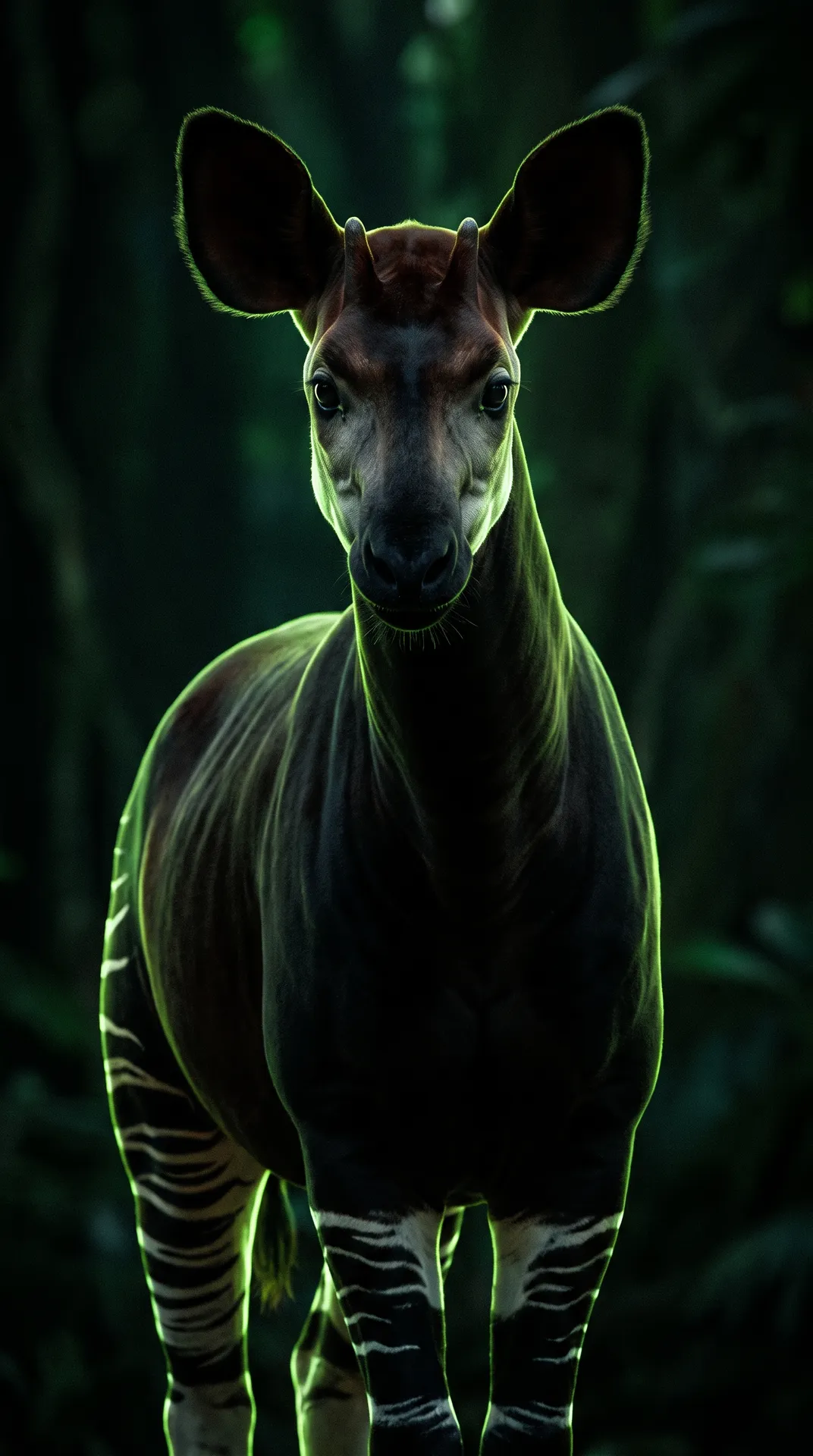
The giraffe's hidden cousin with a blue 18-inch tongue
This forest animal looks like a mix of a zebra, a horse, and a giraffe — but it's its own thing.
Which one is REALLY true about the Okapi?
The short version
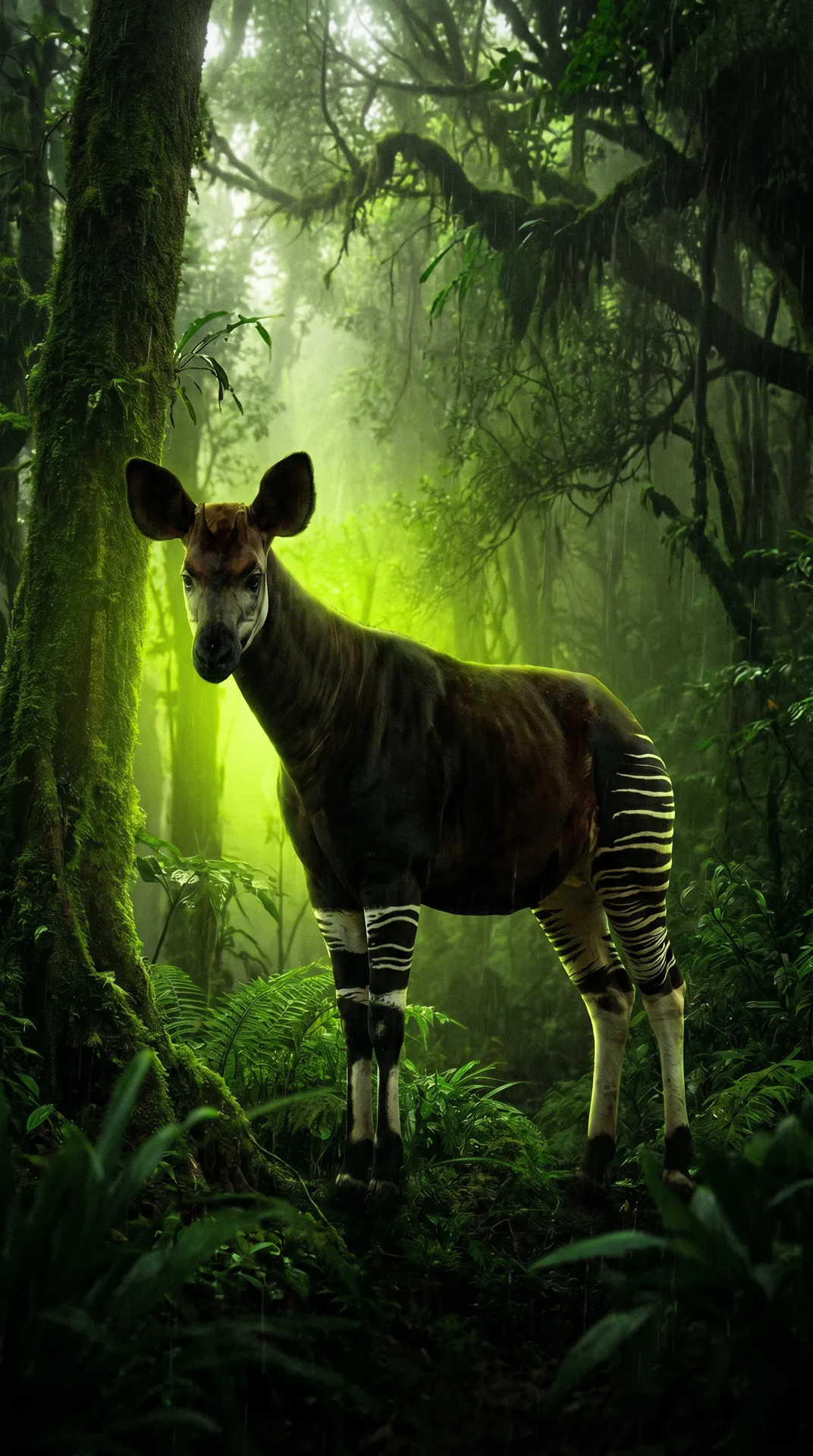
The okapi is the giraffe's only living relative, hidden in the Congo rainforest, with zebra-striped legs, a horse-like body, and a giraffe's face. Its blue-black tongue is ~18 inches long — enough to lick its own eyes and ears and strip leaves. Science didn't confirm it existed until 1901.
Why it's so weird
- ✓The Okapi is the giraffe's only living relative, hidden deep in the rainforests of the Congo.
- ✓The Okapi has the striped legs of a zebra, a body like a dark horse, and the face of a small giraffe.
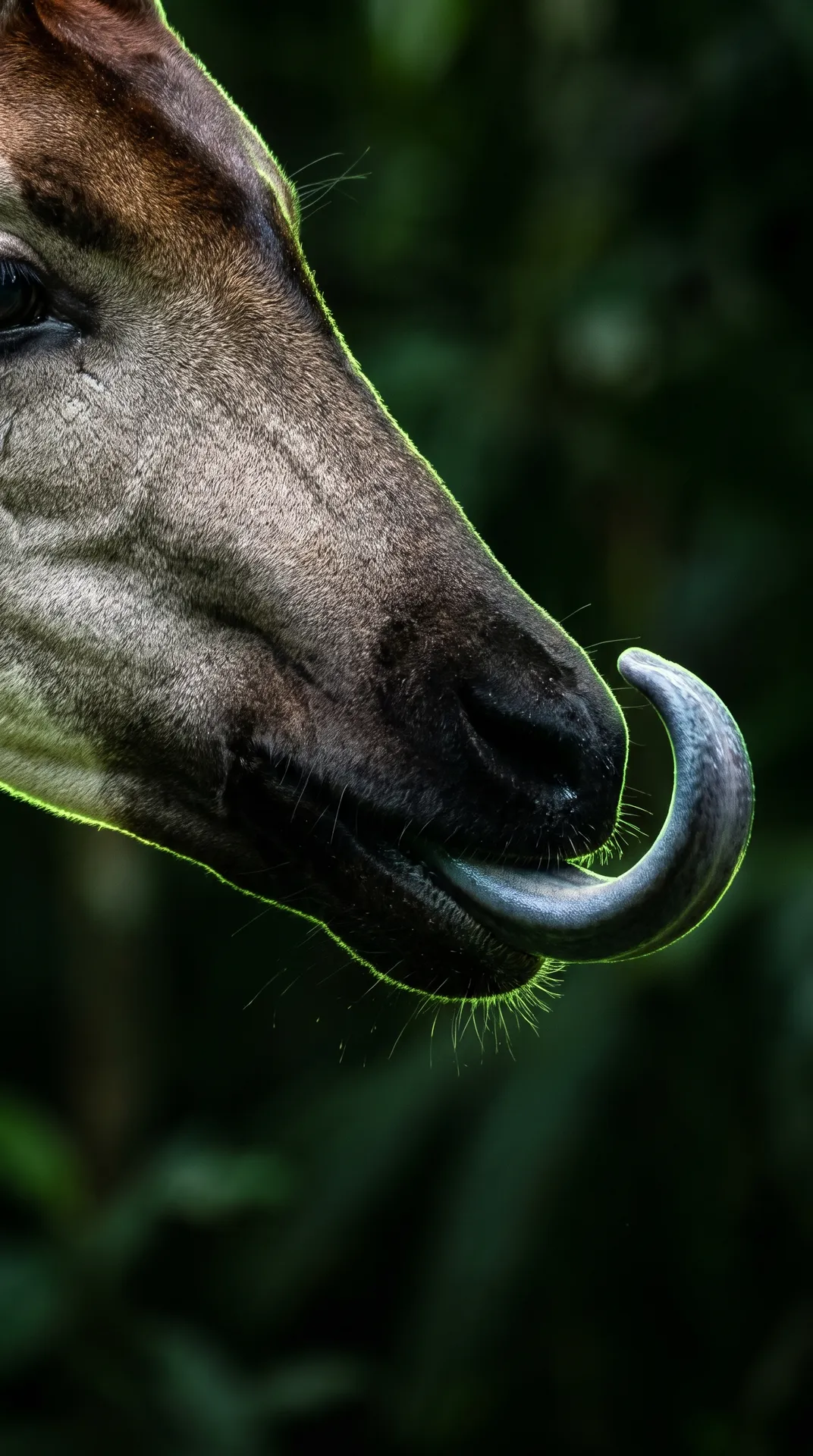
- ✓The Okapi has a blue-black tongue long enough to lick its own eyes and clean inside its own ears.
- ✓The Okapi can stretch its tongue around eighteen inches to strip leaves from branches.
- ✓The Okapi was so shy and hidden that scientists did not confirm it existed until the year 1901.
The Okapi is about 2.0× as long as a 7-year-old! 🤯
The full story
This animal looks like someone combined a zebra, a horse, and a giraffe, but it is actually its very own creature. Meet the okapi, the giraffe's only living relative, hidden deep in the rainforests of the Congo. It has the striped legs of a zebra, a body like a dark horse, and the long neck and face of a small giraffe. And just like a giraffe, it has a huge blue-black tongue, long enough to lick its own eyes and even clean inside its own ears. That tongue can stretch around eighteen inches to strip leaves from branches. Okapis are so shy and so well hidden that scientists did not even confirm they existed until the year nineteen oh one. They even talk to each other in deep infrasound rumbles, far too low for human ears to hear. A living animal that looks like a creature straight out of myth. Follow for more weird animal facts.
The okapi's tongue is a "muscular hydrostat" - almost all muscle and no bone - so it can stretch, curl, and grip like a bendy arm. Okapis browse in the dim rainforest, and this long, grabbing (prehensile) tongue wraps around twigs to strip off leaves. Because it is so long and flexible, it can even reach up to wipe the okapi's own eyes and clean its ears. The blue-black color comes from a pigment called melanin; scientists think the dark color helps protect the tongue, but the exact reason is still debated.
📚 Source: Okapi Fact Sheet: Physical Characteristics - San Diego Zoo Wildlife Alliance ↗Zoo scientists and keepers have directly watched and measured okapis extending their tongues far past their snouts to strip leaves and to wipe their own eyes, ears, and nostrils, as documented in the San Diego Zoo Wildlife Alliance's okapi fact sheet.
📚 Source: Okapi Fact Sheet: Physical Characteristics - San Diego Zoo Wildlife Alliance ↗Watch the 45-second version
Watch it on the channel.
Okapi gallery
Check what you learned
No score, no pressure — just see what stuck. Tap Real or Fake.
“The Okapi is the giraffe's only living relative, hidden deep in the rainforests of the Congo.”
“The Okapi lives its entire life in total darkness, in flooded caves deep beneath Europe.”
“The Okapi has the striped legs of a zebra, a body like a dark horse, and the face of a small giraffe.”