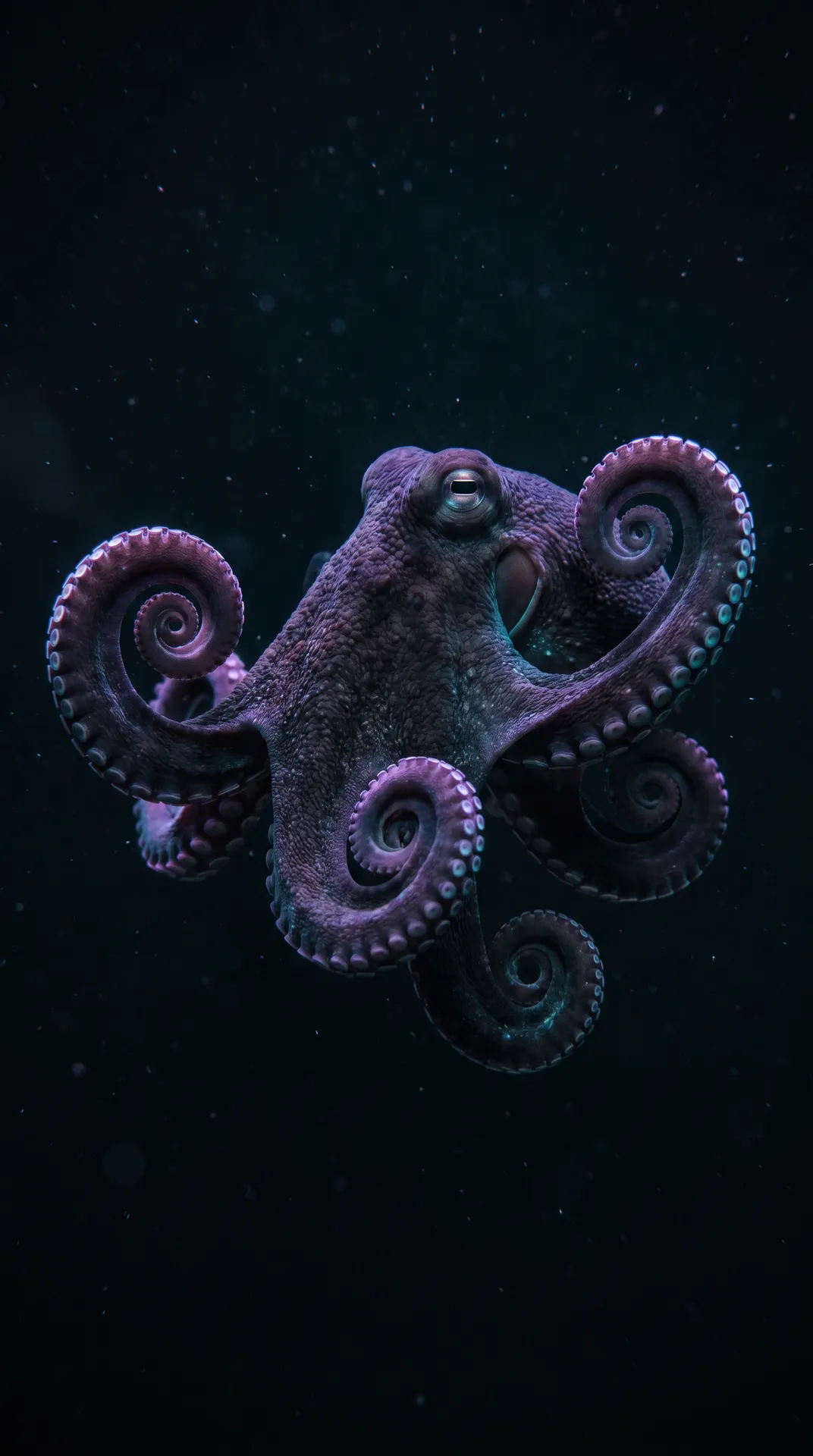
The animal with three hearts and nine brains
This animal has three hearts, nine brains, and blue blood.
Which one is REALLY true about the Octopus?
The short version
The octopus has two hearts for its gills and one for its body — and the body heart stops beating when it swims, so it prefers to crawl. It also has a mini-brain in each of its eight arms, so every arm can taste, touch and decide on its own.
Why it's so weird
- ✓The Octopus has three hearts and nine brains.
- ✓The Octopus has blue blood, because it carries oxygen with copper instead of iron.
- ✓The Octopus has a separate mini-brain in each of its eight arms, so every arm can taste and decide on its own.
- ✓The Octopus stops its main heart whenever it swims, which is why it usually prefers to crawl.
You could line up about 1 of them along a 7-year-old!
The full story
This animal has three hearts, nine brains, and blue blood. Meet the octopus, easily one of the strangest creatures in the entire ocean. Two of its three hearts pump blood to the gills, while the third pumps it around the rest of the body. But here is the really weird part. That main heart actually stops beating whenever the octopus swims, which is a big reason they usually prefer to crawl instead. On top of that, it has one central brain, plus a separate mini brain inside each of its eight arms. That means every single arm can taste, touch, and make decisions completely on its own. And the blue blood? That is because it uses copper instead of iron to carry oxygen through its body. So basically, it is nine brains, doing nine different things at once. Follow for more weird animals.
An octopus has two small "gill hearts" that push blood through its gills to load it with oxygen, plus one big "body heart" that pumps that fresh blood to the rest of its body. When it swims by squeezing water out like a jet, that squeezing also presses on the blood vessels feeding the body heart, so the heart can't beat well and the octopus gets tired fast. Crawling doesn't squeeze those vessels, so its body heart keeps beating happily, which is why crawling is the octopus's favorite way to get around.
📚 Source: Smithsonian Ocean: Cephalopods (Octopus, Squid, Cuttlefish, and Nautilus) ↗Scientists counted the neurons (brain cells) in octopuses and found about two-thirds of them are spread out in the arms instead of the central brain; in lab experiments at the Okinawa Institute of Science and Technology, arms could even sense texture and position on their own, showing how much "thinking power" lives in each arm.
📚 Source: Okinawa Institute of Science and Technology (OIST): Do octopuses' arms have a mind of their own? ↗Watch the 45-second version
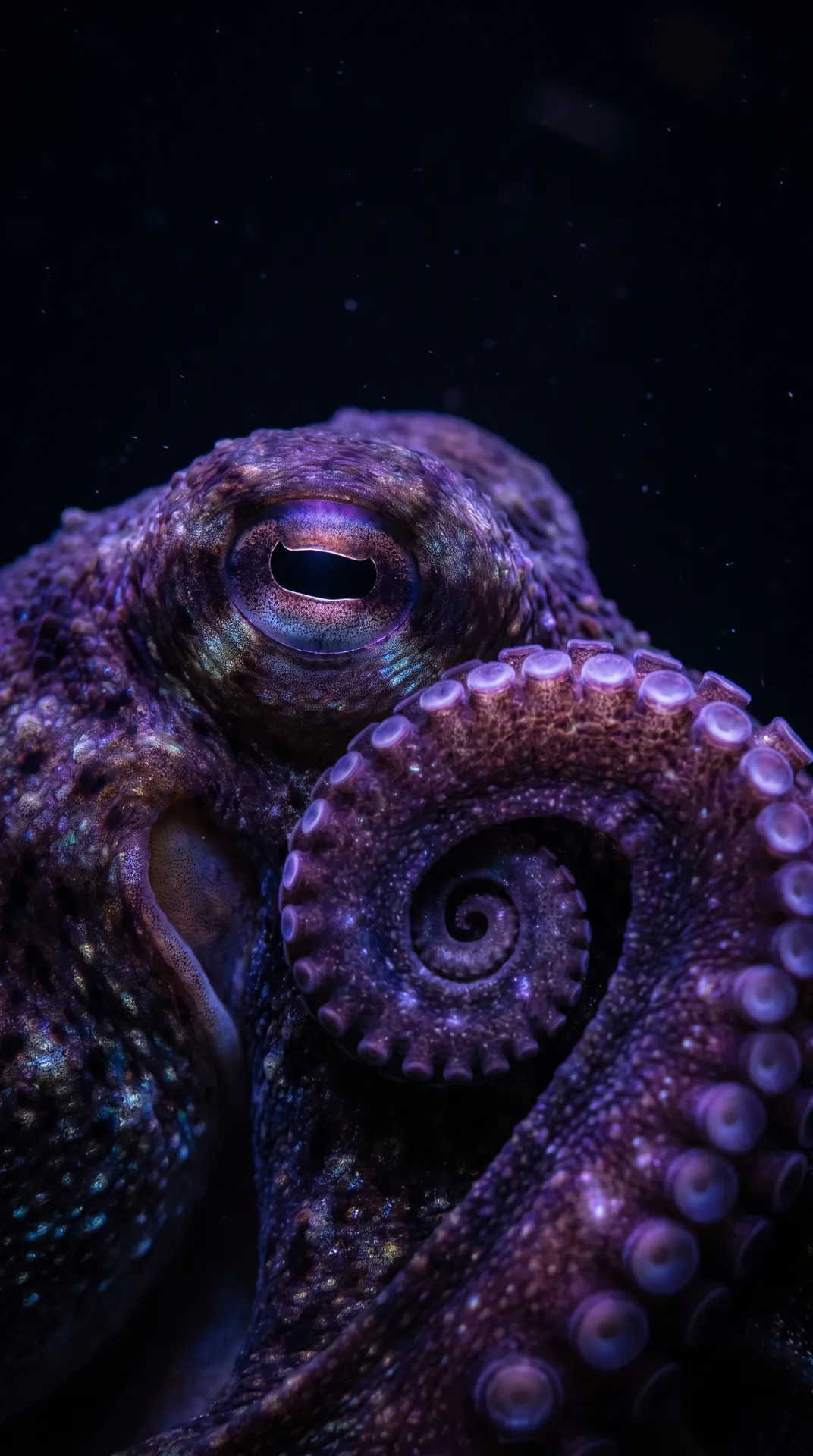
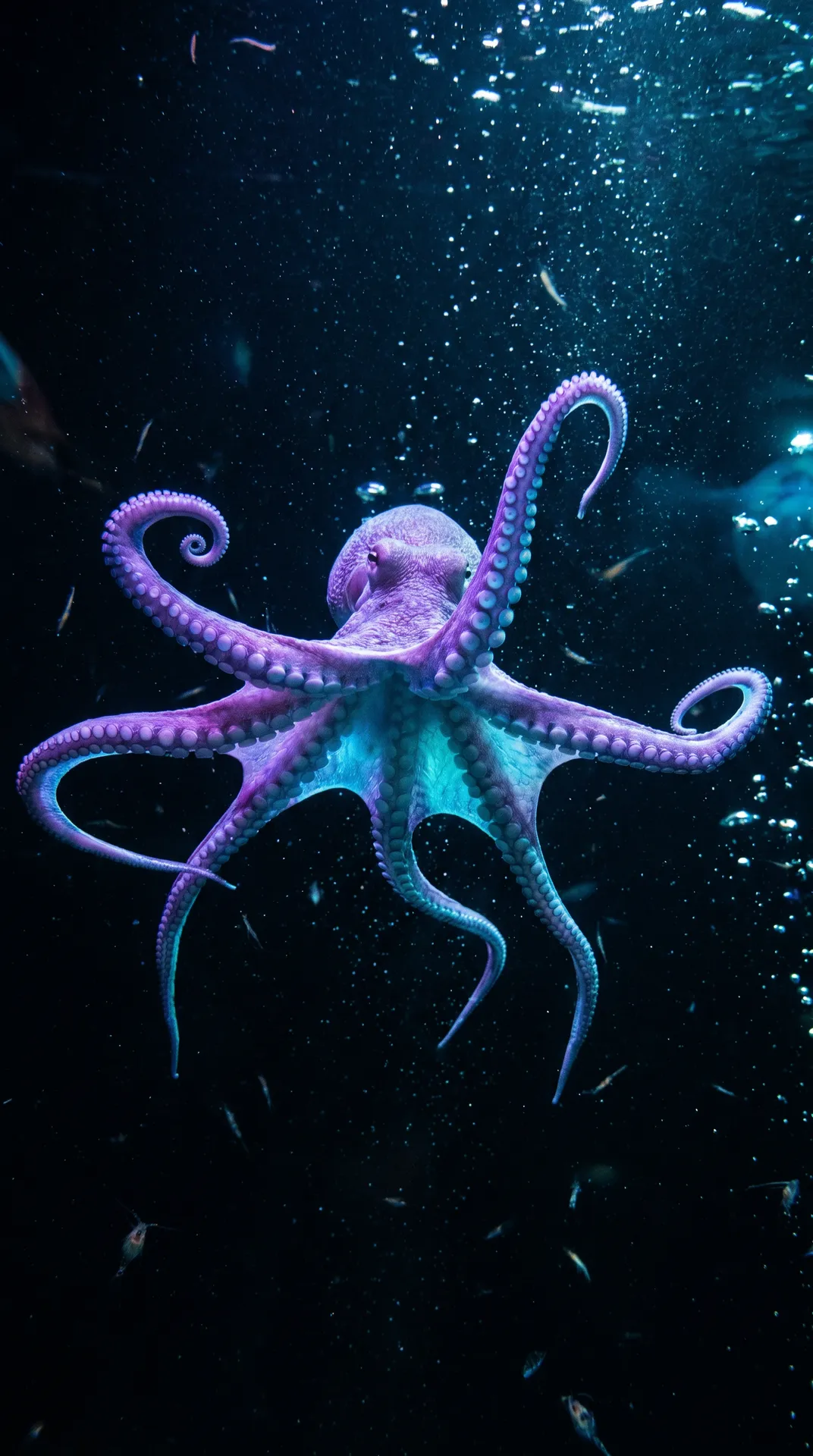
Octopus gallery
Check what you learned
No score, no pressure — just see what stuck. Tap Real or Fake.
“The Octopus has three hearts and nine brains.”
“The Octopus is the giraffe's only living relative, hidden deep in the rainforests of the Congo.”
“The Octopus has blue blood, because it carries oxygen with copper instead of iron.”