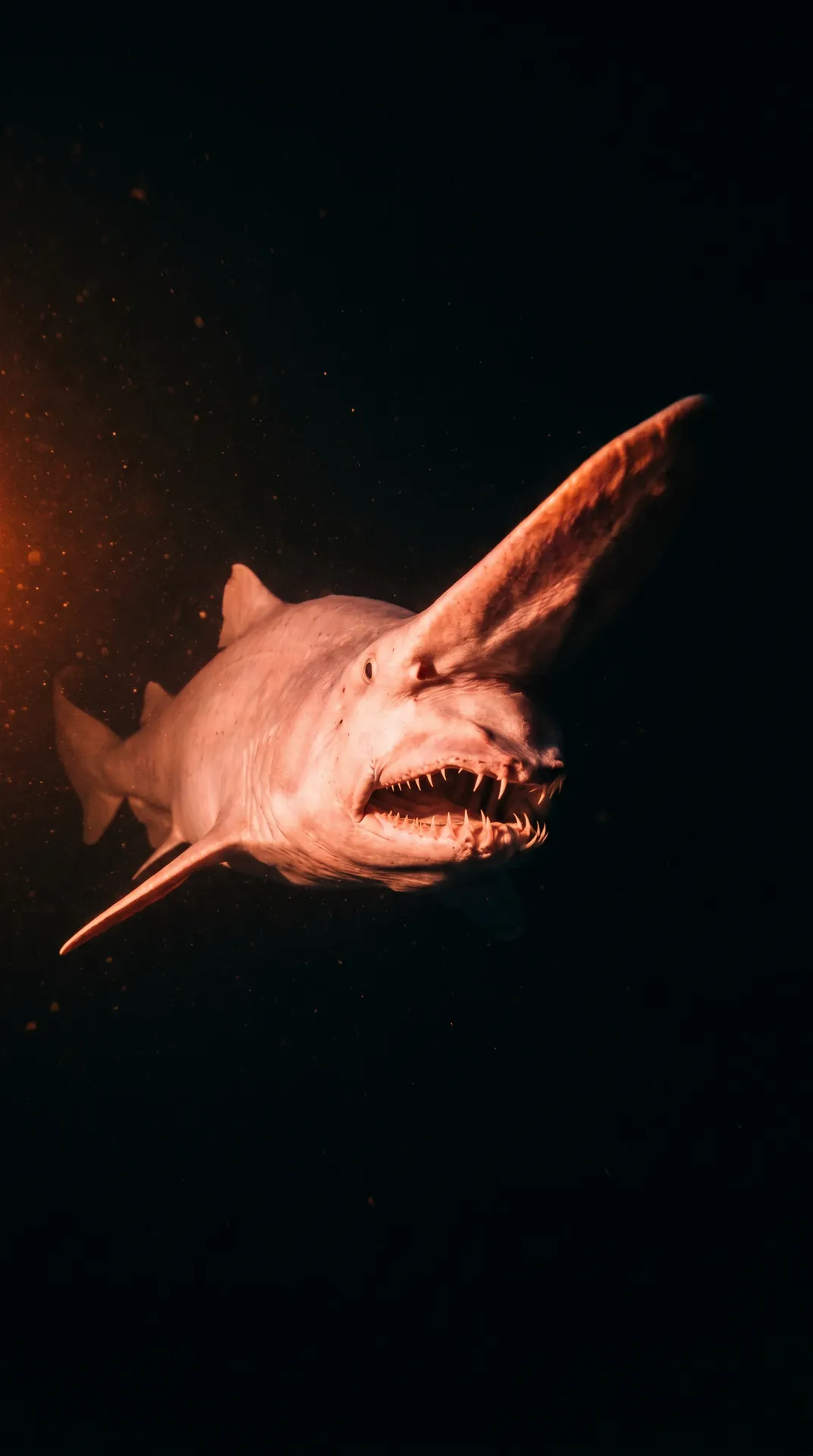
The deep-sea shark that shoots its jaws out of its face
This deep-sea shark can launch its entire jaw right out of its face.
Which one is REALLY true about the Goblin Shark?
The short version
The goblin shark is a rare, pink, deep-sea 'living fossil' whose family has barely changed in 100+ million years. Its long sensor-packed snout detects prey's electric fields in the dark, and its jaws rocket forward on stretchy ligaments like a slingshot to snatch prey, then retract.
Why it's so weird
- ✓The Goblin Shark is a rare, pink, deep-sea often called a living fossil.
- ✓The Goblin Shark belongs to a family that has barely changed in over a hundred million years.
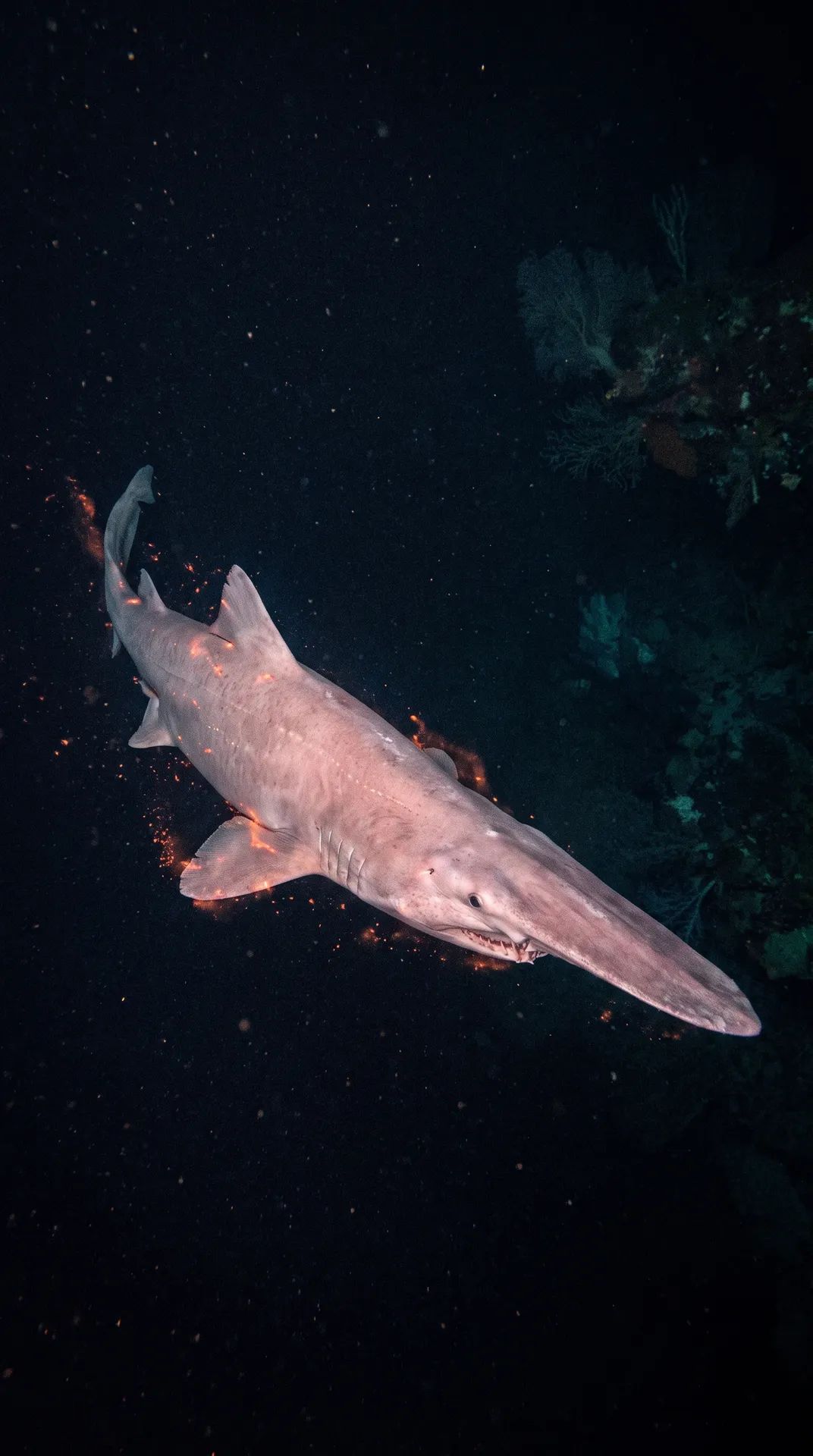
- ✓The Goblin Shark uses a long, flat snout packed with sensors to feel the electric fields of hidden .
- ✓The Goblin Shark has pale, pink skin because its blood vessels show right through it.
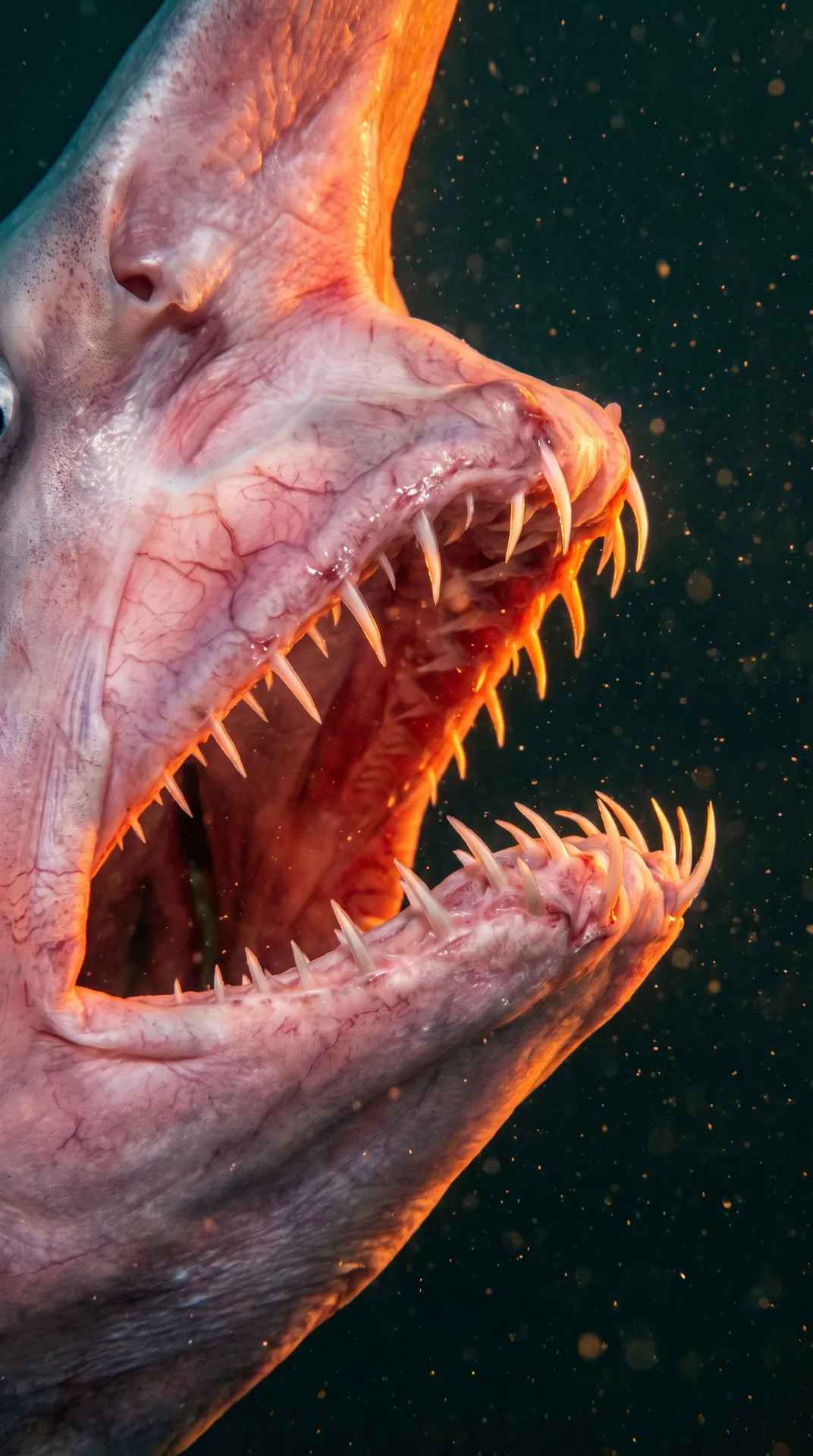
- ✓The Goblin Shark rockets its jaws forward on stretchy ligaments like a slingshot, then slides them back in.
The Goblin Shark is about 4.9× as long as a 7-year-old! 🤯
The full story
This shark can launch its entire jaw right out of its face. Meet the goblin shark, a rare, pink, deep-sea predator often called a living fossil, because its family has barely changed in over a hundred million years. It drifts slowly through the pitch-black deep ocean, where sunlight never reaches, using a long flat snout packed with sensors to detect the faint electric fields of hidden prey. Its skin is a pale, translucent pink because the blood vessels show right through it. But the real horror is the mouth. When a fish comes close, the shark's jaws suddenly rocket forward on stretchy ligaments, shooting out like a slingshot to snatch the victim before it can react. Then the jaws slide back into place. Ancient, ghostly, and built like a nightmare. Follow for more weird animal facts.
The goblin shark's jaws are normally tucked back and held by stretchy ligaments kept under tension, like a pulled-back rubber band on a slingshot. When prey is close, that tension releases and the whole jaw catapults far forward to grab the food, then slides back into place. It can hunt in total darkness because its long, flat snout is packed with jelly-filled sensors (called ampullae of Lorenzini) that feel the tiny electric fields every living animal's body gives off. And it looks pink not from color in the skin but because the skin is thin and see-through, so the red blood vessels underneath show right through it.
📚 Source: Goblin Sharks — U.S. Fish & Wildlife Service ↗Scientists filmed live goblin sharks with high-speed cameras and measured their jaws shooting forward at up to about 3 meters per second — the fastest jaws recorded in any fish — in roughly a third of a second.
📚 Source: Unraveling the jaw-dropping goblin shark — Hokkaido University ↗Watch the 45-second version
Watch it on the channel.
Goblin Shark gallery
Check what you learned
No score, no pressure — just see what stuck. Tap Real or Fake.
“The Goblin Shark is a rare, pink, deep-sea predator often called a living fossil.”
“The Goblin Shark flicks a cloud of tiny barbed hairs off its belly that lodge in eyes and skin and burn for hours.”
“The Goblin Shark belongs to a family that has barely changed in over a hundred million years.”