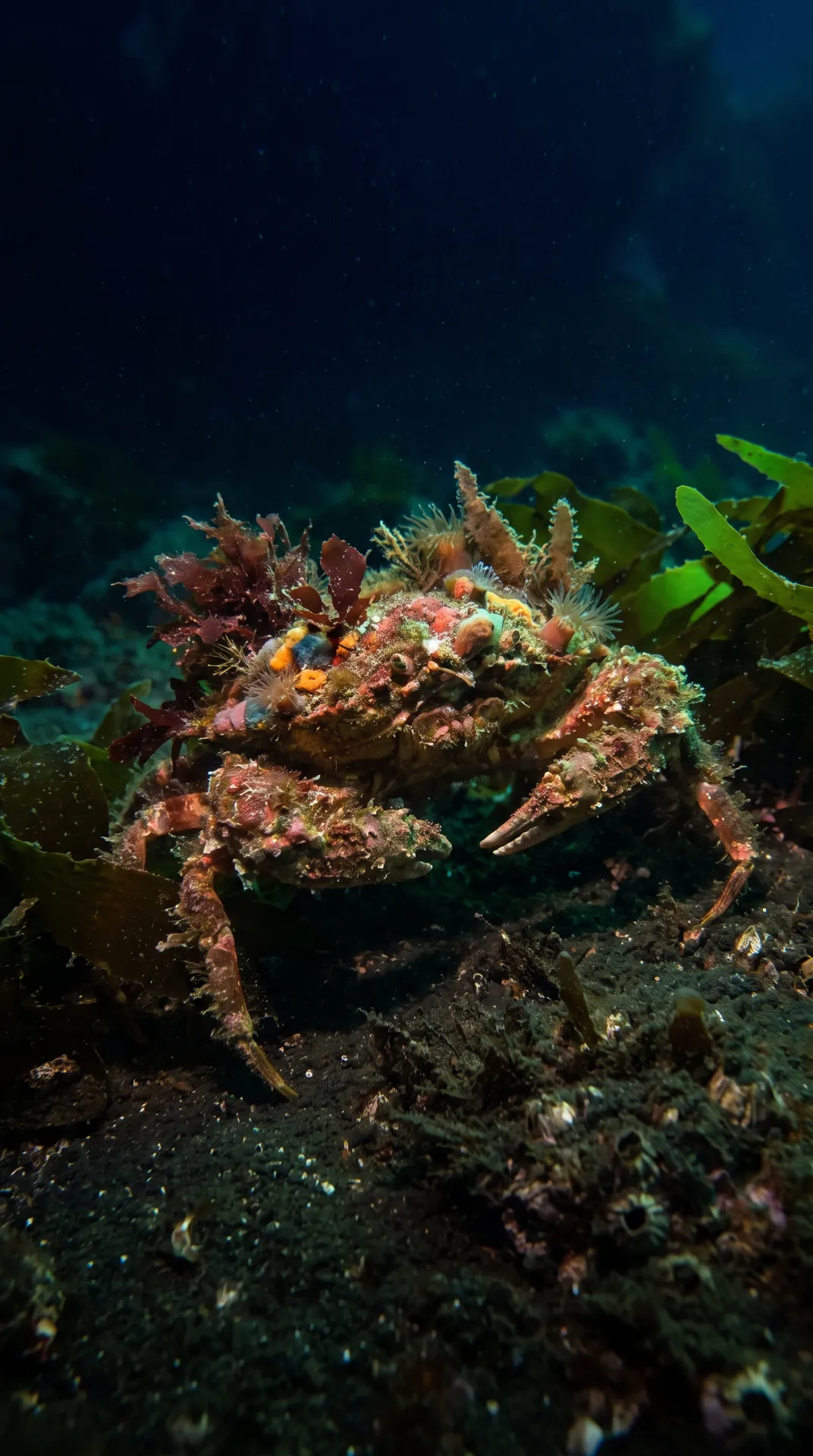
The crab that glues living things to its body as a disguise
This crab glues living plants and animals onto its body to wear as a disguise.
Which one is REALLY true about the Decorator Crab?
The short version
The decorator crab attaches living seaweed, sponge, coral, and stinging anemones to hooked hairs on its shell (like velcro) for camouflage and borrowed chemical defense. When it molts, it carefully replants the decorations onto its new shell.
Why it's so weird
- ✓The Decorator Crab builds its own disguise by attaching living things onto its body.
- ✓The Decorator Crab snips off bits of seaweed, sponge, coral and even stinging anemones for .
- ✓The Decorator Crab sticks its decorations onto tiny hooked hairs on its shell, like natural velcro.
- ✓The Decorator Crab borrows toxic and stinging creatures to get a built-in chemical defense it didn't grow.
- ✓The Decorator Crab carefully plucks off its decorations and replants them when it molts into a bigger shell.
You could line up about 12 of them along a 7-year-old!
The full story
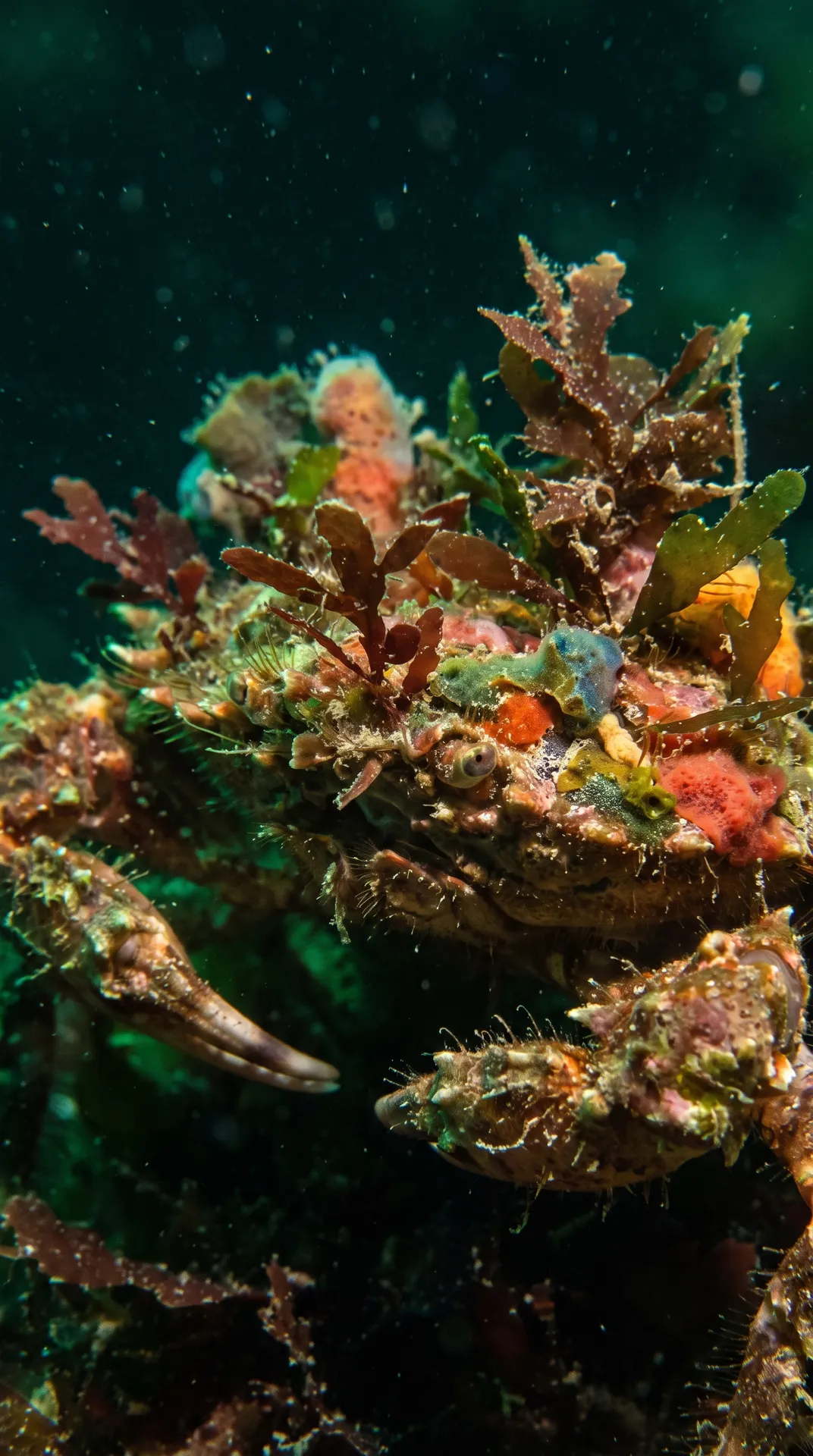
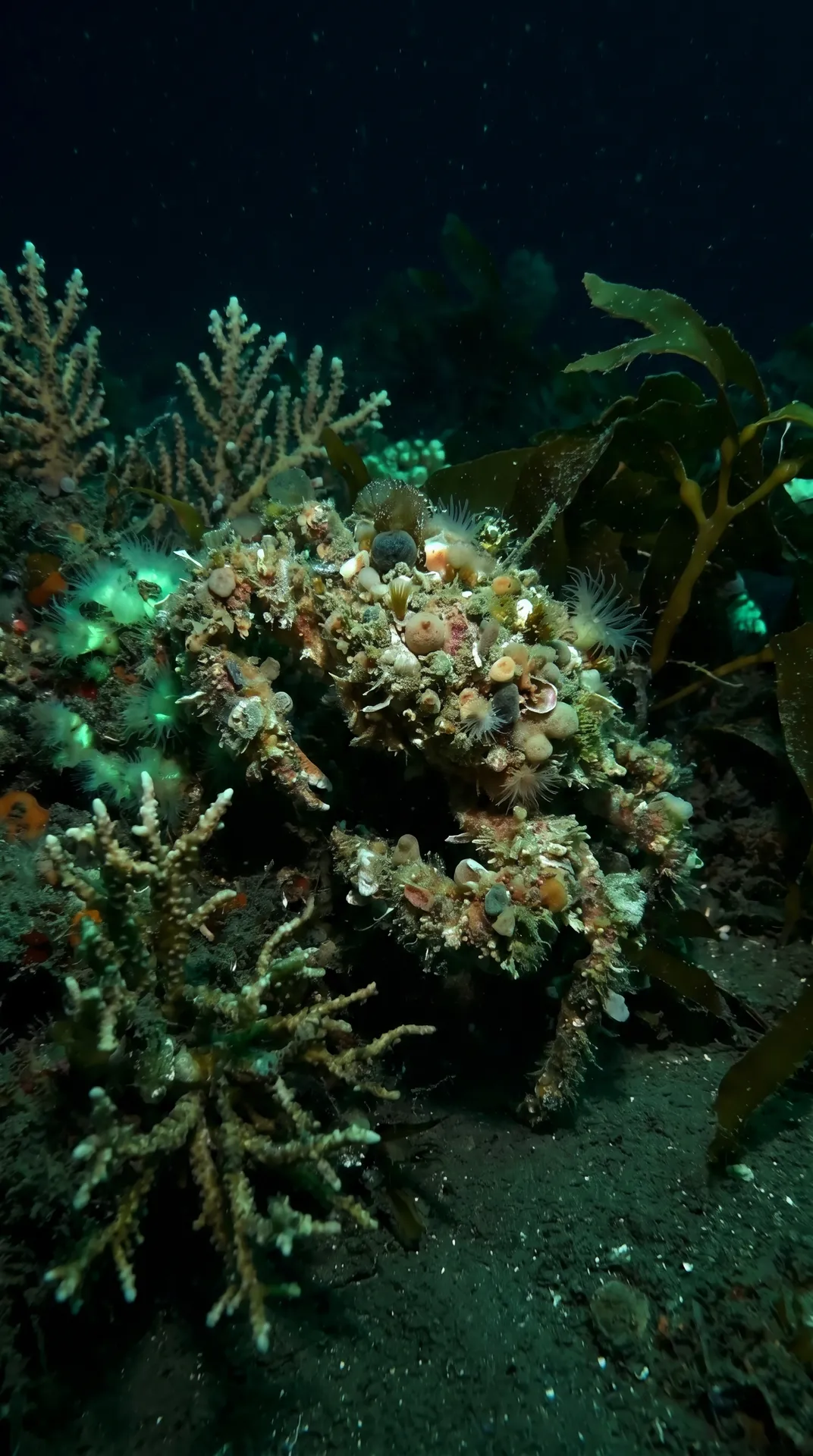
This crab builds its own disguise by gluing living things onto its body. Meet the decorator crab, an underwater artist obsessed with camouflage. It carefully snips off bits of seaweed, sponge, coral, and even stinging anemones, then attaches them to tiny hooked hairs on its shell, like natural velcro. The result is a walking garden so convincing that predators swim right past, mistaking the crab for a harmless clump of reef. Some of the creatures it borrows are toxic or sting, giving the crab a built-in chemical defense it did not even have to grow. And when the crab molts into a bigger shell, it does not throw the old decorations away. It carefully plucks them off and replants them onto its fresh new body. A crab that gardens itself for protection. Follow for more weird animal facts.
The crab's shell is covered in tiny curved bristles called setae that work like the hook side of Velcro. When the crab presses a piece of seaweed, sponge, or anemone against them, the hooked tips snag it and hold it on. Because those pieces are alive, many keep growing right on the crab, and a stinging anemone or bad-tasting sponge makes the crab dangerous or yucky to eat, giving it a defense it never grew itself. The living cover also breaks up the crab's shape, so sharp-eyed predators can't tell it is a crab.
📚 Source: Monterey Bay Aquarium — Decorator crab ↗In field-tethering and lab experiments with the crab Tiarinia cornigera, decorated crabs survived predator attacks far better than crabs with their decorations removed, and the crabs added extra algae when a predatory pufferfish was nearby.
📚 Source: Decorating behaviour by the majid crab Tiarinia cornigera as protection against predators — Journal of the Marine Biological Association of the UK (Cambridge Core) ↗Watch the 45-second version
Watch it on the channel.
Decorator Crab gallery
Check what you learned
No score, no pressure — just see what stuck. Tap Real or Fake.
“The Decorator Crab builds its own disguise by attaching living things onto its body.”
“The Decorator Crab squeaks a high-pitched, furious little war cry instead of croaking when something disturbs it.”
“The Decorator Crab snips off bits of seaweed, sponge, coral and even stinging anemones for camouflage.”