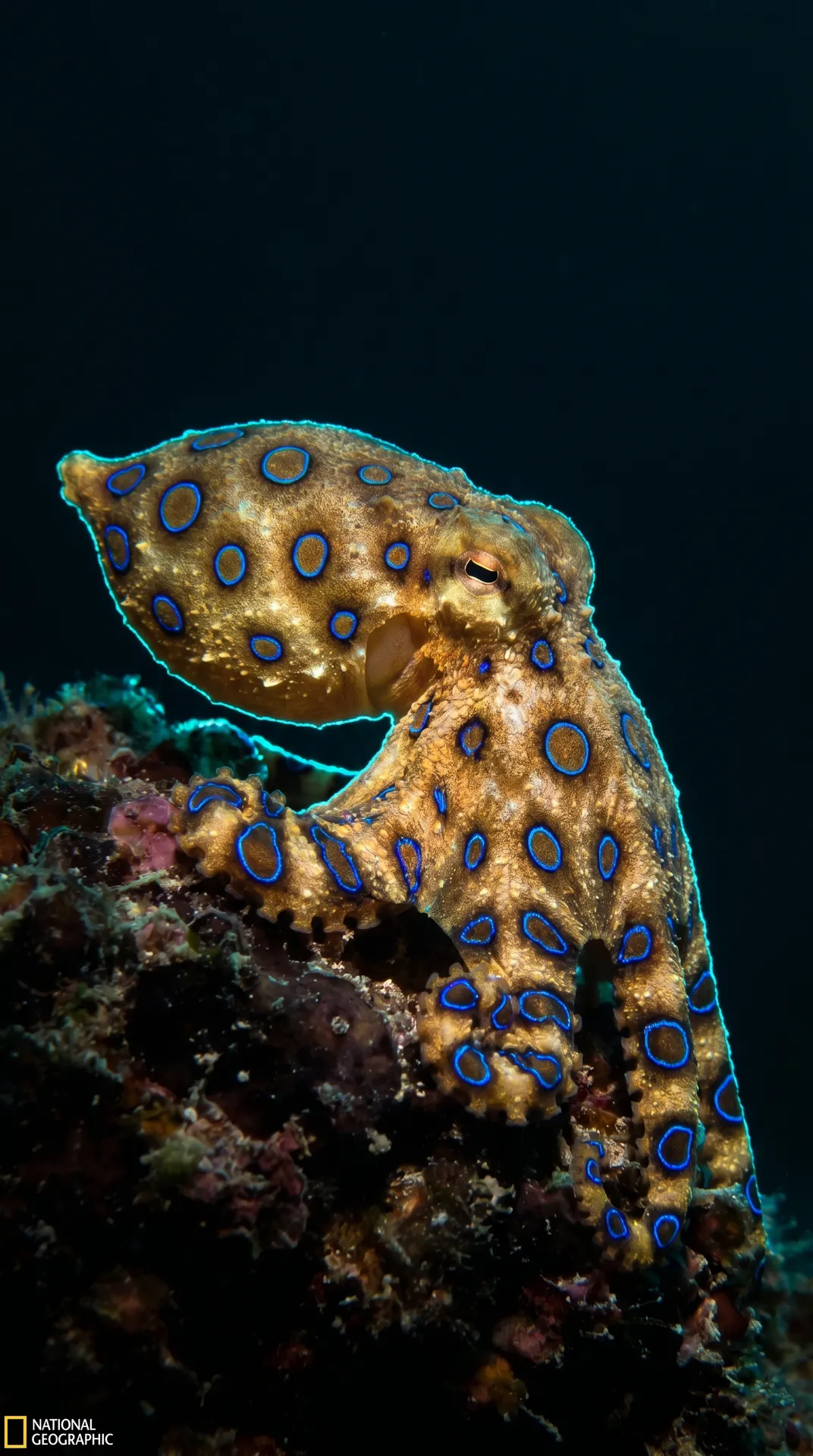
The tiny octopus with enough venom to kill 26 people
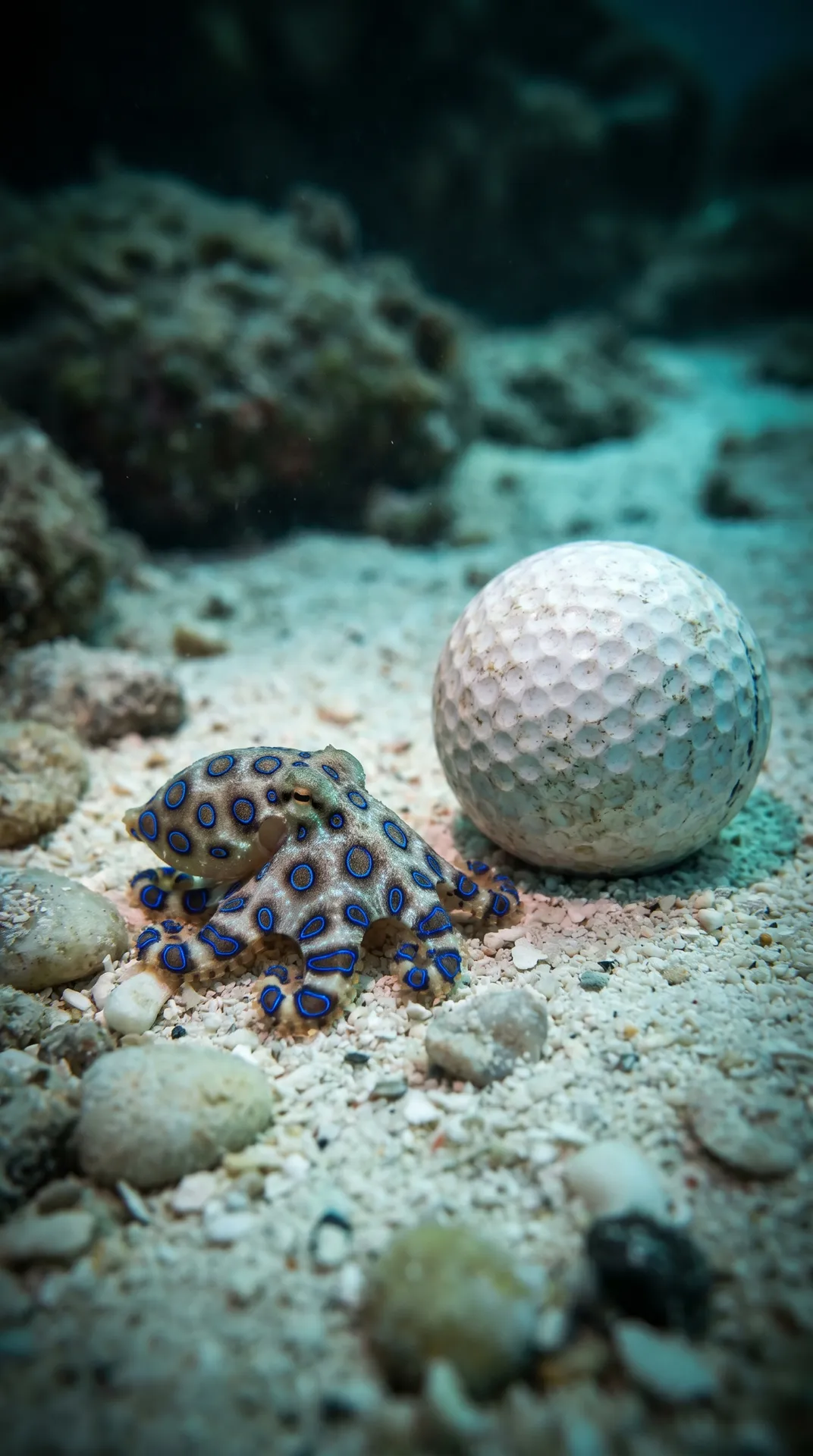
This octopus is smaller than a golf ball, and it carries enough venom to kill 26 people, with no antidote.
Which one is REALLY true about the Blue-Ringed Octopus?
The short version
The blue-ringed octopus is one of the most venomous animals in the ocean. Its tetrodotoxin is about 1,000 times stronger than cyanide, it carries enough to kill 26 adults in minutes, and there is no antivenom. Its bite is nearly painless, so victims often don't notice until the paralysis sets in, and it flashes around 60 glowing blue rings as a final warning right before it strikes.
Why it's so weird
- ✓The Blue-Ringed Octopus is smaller than a golf ball, yet one of the most animals in the whole ocean.
- ✓The Blue-Ringed Octopus carries a about a thousand times stronger than cyanide, with no antidote.
- ✓The Blue-Ringed Octopus holds enough to harm around 26 adults in just minutes.
- ✓The Blue-Ringed Octopus has a bite so tiny and painless that many people never even feel it happen.
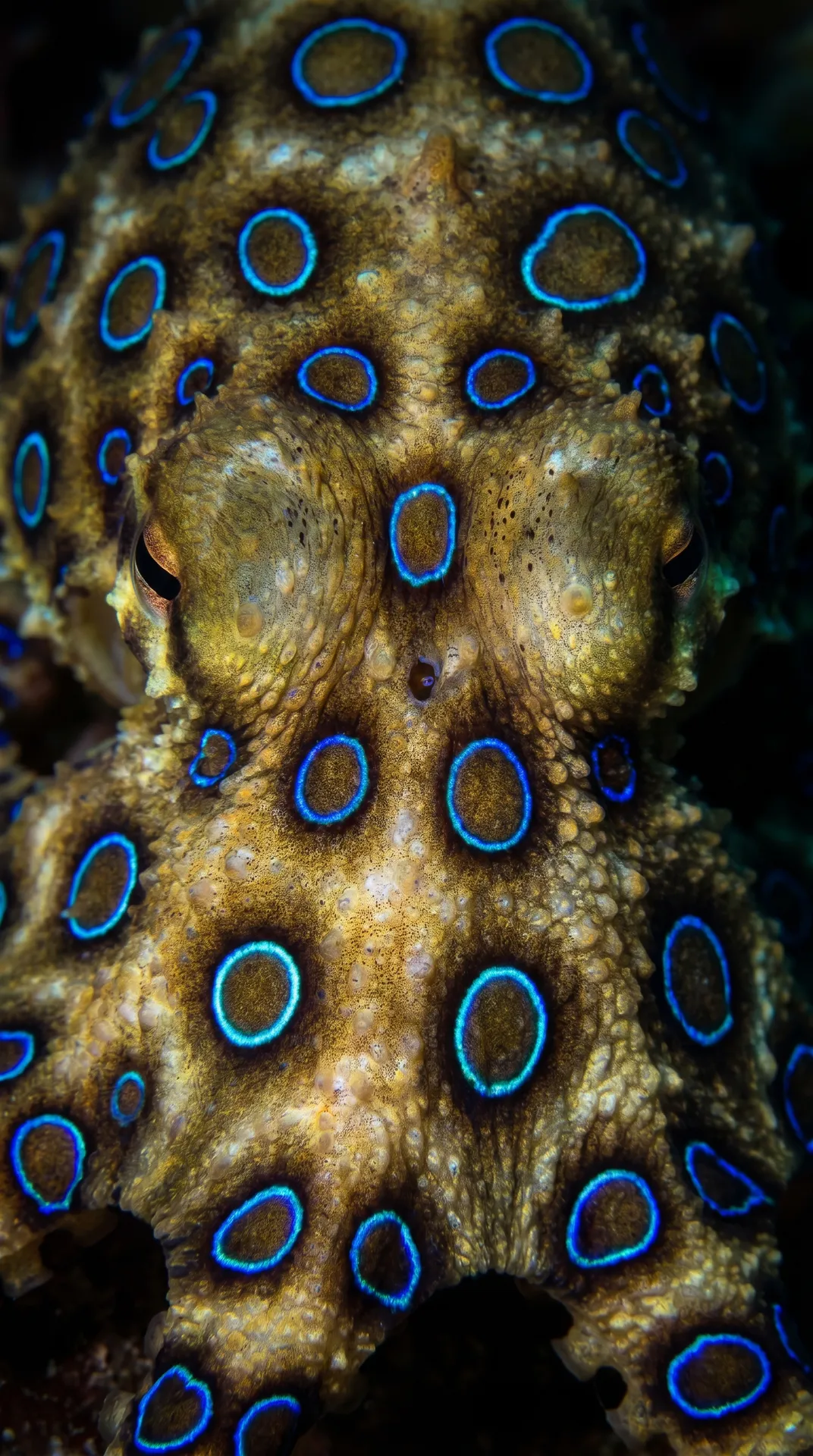
- ✓The Blue-Ringed Octopus flashes around 60 glowing blue rings as a final warning right before it strikes.
You could line up about 6 of them along a 7-year-old!
The full story
This little octopus can kill twenty-six people in minutes, and there is no antidote. And it is smaller than a golf ball. Meet the blue-ringed octopus, one of the most venomous creatures in the entire ocean. Its venom is a toxin about a thousand times stronger than cyanide. But here is the truly terrifying part. Its bite is so tiny and painless that most victims never even feel it. The venom quietly paralyzes you, so you stay wide awake while you slowly lose the ability to move or even breathe. Doctors can only keep you alive by breathing for you until it finally wears off. And those gorgeous glowing blue rings? They are not for decoration. The octopus flashes them in under a second as a final warning, right before it bites. Follow for more weird animal facts.
The octopus's spit carries a chemical called tetrodotoxin. It works by plugging the tiny "sodium gates" that nerve cells use to send their electrical signals, so the nerves go quiet and the muscles freeze, including the muscles you breathe with. There is no antidote because nothing can pull the toxin back off quickly, so doctors keep a bitten person breathing on a machine until it slowly wears off on its own. Scientists think tiny bacteria living on the octopus help make the toxin, though they are still studying exactly how.
📚 Source: Southern Blue-lined Octopus - The Australian Museum ↗By chemically analyzing the octopus's venom, scientists identified its poison as tetrodotoxin (the very same toxin found in pufferfish) and even grew tetrodotoxin-making bacteria from the animal, though researchers still debate whether those bacteria make all of it.
📚 Source: Distribution of Tetrodotoxin in Blue-Ringed Octopuses and the Hunt for Tetrodotoxin-Producing Symbiotic Bacteria (Williams, 2009, Utah State University DigitalCommons) ↗Watch the 45-second version
Watch it on the channel.
Blue-Ringed Octopus gallery
Check what you learned
No score, no pressure — just see what stuck. Tap Real or Fake.
“The Blue-Ringed Octopus is smaller than a golf ball, yet one of the most venomous animals in the whole ocean.”
“The Blue-Ringed Octopus can grow up to around ten feet long while keeping almost all of that body buried in a burrow.”
“The Blue-Ringed Octopus carries a venom about a thousand times stronger than cyanide, with no antidote.”