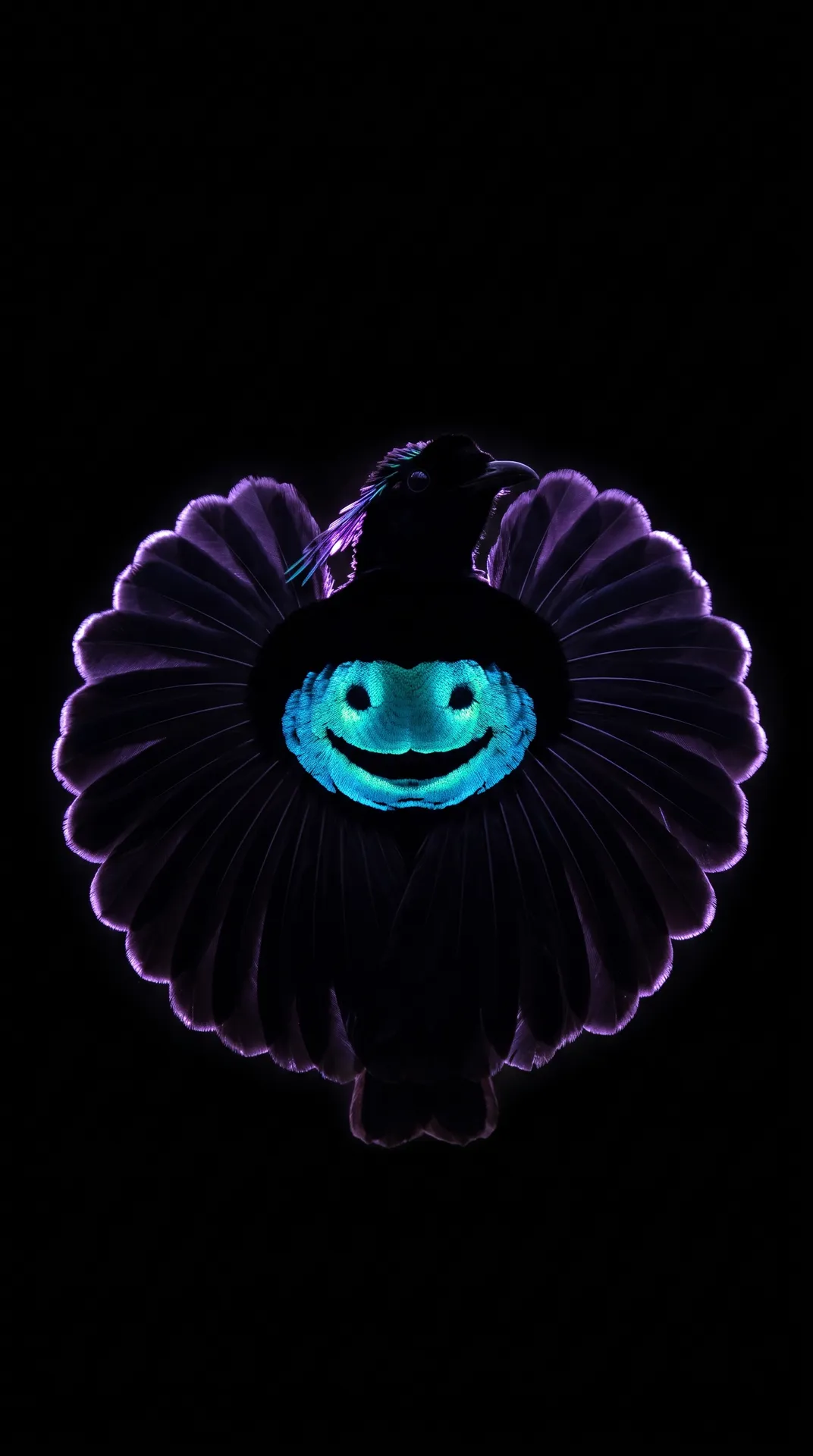
The bird that turns into a glowing smiley face to find love
This bird transforms into a glowing alien smiley face to win a mate.
Which one is REALLY true about the Bird of Paradise?
The short version
The male superb bird-of-paradise snaps open a cape of ultra-black feathers that absorb over 99% of light, against which two blue-green chest patches and eye-spots form a glowing 'smiley face,' then dances in a hypnotic circle. If unimpressed, the female just leaves.
Why it's so weird
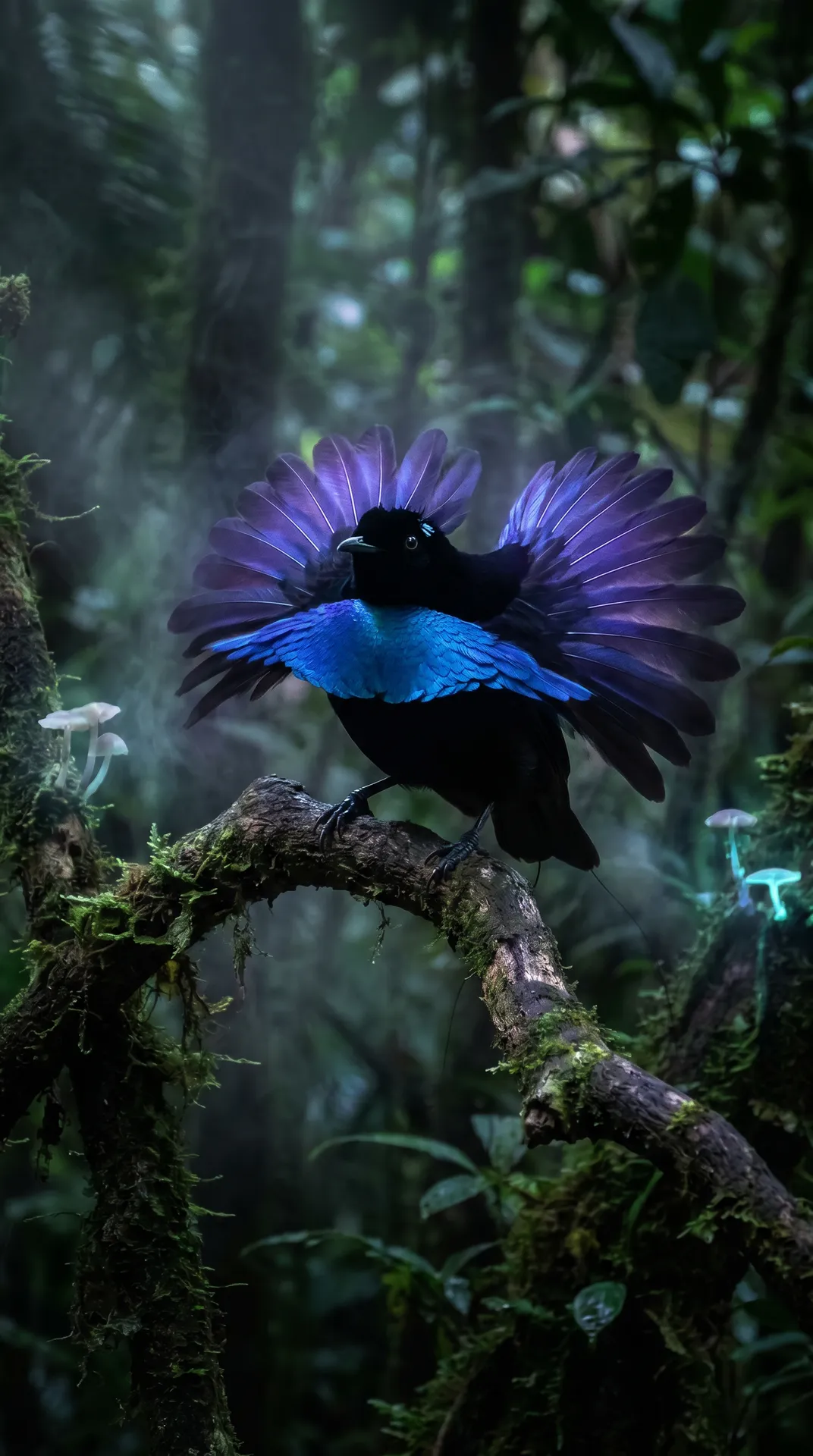
- ✓The Bird of Paradise has a male that snaps open a cape of jet-black feathers to win a mate.
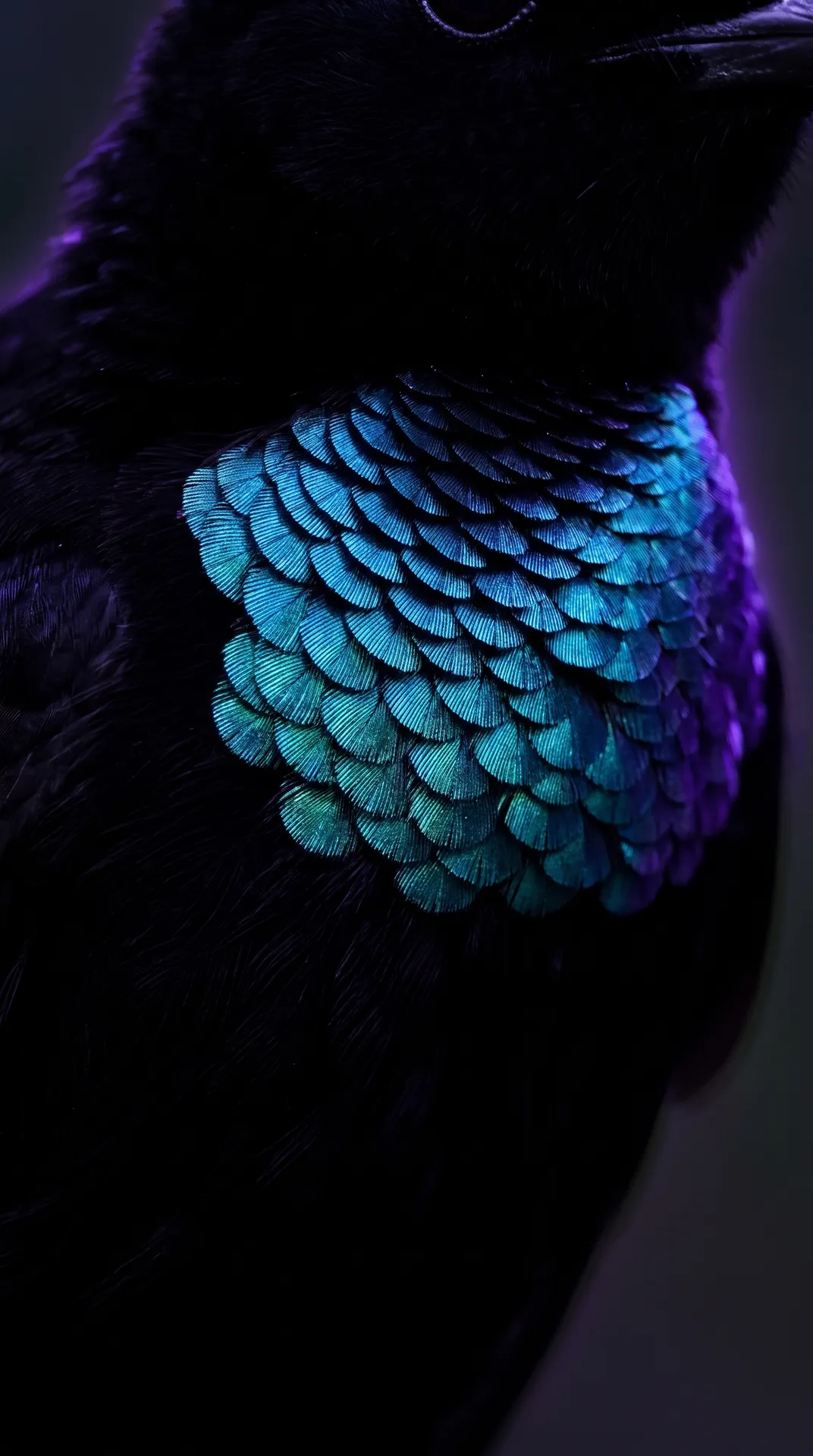
- ✓The Bird of Paradise wears feathers so black they absorb over 99% of the light that hits them.
- ✓The Bird of Paradise shows two glowing blue-green patches that pop into the shape of a smiling face.
- ✓The Bird of Paradise dances around the female in a fast, hypnotic circle while clicking and snapping.
- ✓The Bird of Paradise reflects less than one percent of light, rivaling the darkest materials humans have made.
You could line up about 5 of them along a 7-year-old!
The full story
To win a mate, this bird literally transforms into a black, glowing smiley face. Meet the superb bird of paradise, one of the strangest performers in the entire animal kingdom. When a female is watching, the male snaps open a cape of jet-black feathers that absorb almost all the light that hits them, so dark they look like a shadow cut out of the world. Against that void, two brilliant blue-green chest patches and two bright dots pop into the shape of a glowing, smiling face. Then he starts to dance, bouncing around her in a fast, hypnotic circle, clicking and snapping as he goes. The black is so extreme it reflects less than one percent of light, rivaling the darkest materials humans have ever made. And if she is not impressed, she simply flies away. Follow for more weird animal facts.
The cape isn't just packed with dark pigment (a chemical called melanin) — its real trick is shape. Each tiny feather branch is bent and tilted into a curved comb of spikes, so light that lands bounces around inside again and again instead of reflecting straight back to your eye, and a little is soaked up at every bounce until almost none escapes. This 'light trap' absorbs over 99% of the light, making the cape far blacker than ordinary black feathers. And because your eye sees no glow around them, the blue-green patches next to the super-black look amazingly bright, as if they are lit up.
📚 Source: Structural absorption by barbule microstructures of super black bird of paradise feathers (Nature Communications, McCoy et al. 2018) ↗Scientists photographed the feathers under a scanning electron microscope and measured how little light bounced off them with a spectrophotometer (finding just 0.05-0.31% reflected), and in a clever test the super-black feathers still looked black even after being coated in shiny gold while ordinary black feathers turned gold — proving it is the feathers' tiny shape, not just their color, that traps the light.
📚 Source: Structural absorption by barbule microstructures of super black bird of paradise feathers (Nature Communications, McCoy et al. 2018) ↗Watch the 45-second version
Watch it on the channel.
Bird of Paradise gallery
Check what you learned
No score, no pressure — just see what stuck. Tap Real or Fake.
“The Bird of Paradise has a male that snaps open a cape of jet-black feathers to win a mate.”
“The Bird of Paradise is a sea slug barely an inch long that drifts upside down on the ocean surface.”
“The Bird of Paradise wears feathers so black they absorb over 99% of the light that hits them.”